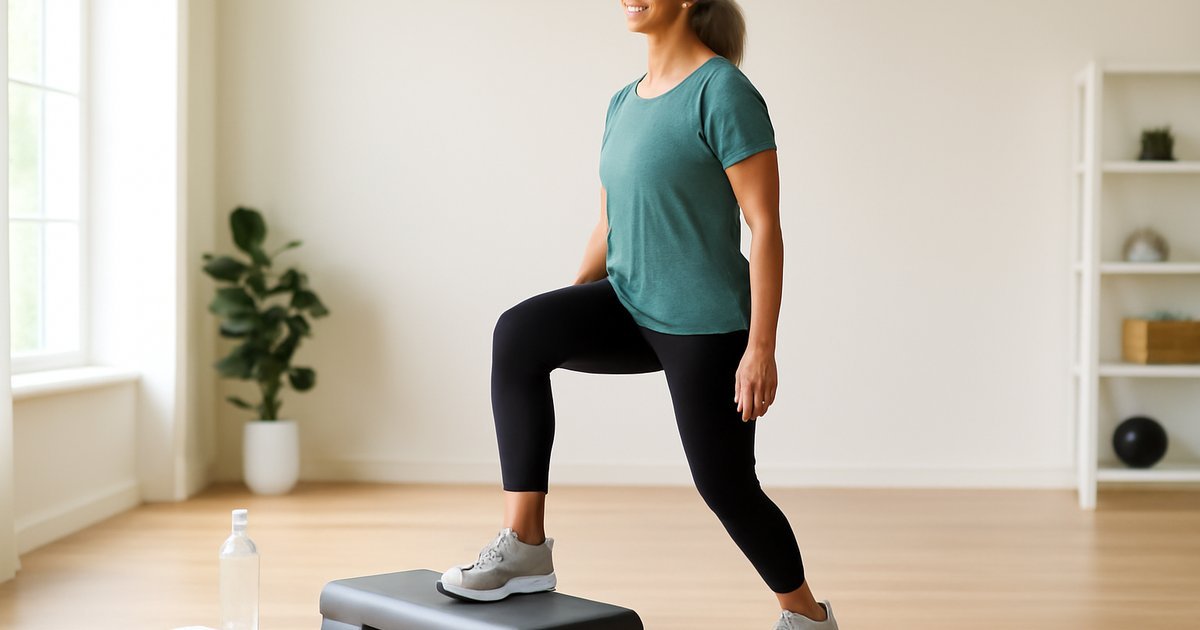
Box Step Training After 50: Benefits, Safety & How to Start
A low-impact, high-reward workout that builds leg strength, balance, and cardiovascular endurance — all from a single sturdy platform.
Why Box Step Training Deserves Your Attention After 50
Imagine your doctor telling you that one of the most effective tools for improving your heart health, leg strength, and balance could fit in the corner of your living room. That tool exists — and it’s a simple step platform.
According to the CDC, adults over 50 who engage in regular moderate-intensity aerobic and muscle-strengthening activity significantly reduce their risk of cardiovascular disease, type 2 diabetes, and fall-related injuries. Yet fewer than 28% of Americans aged 50 and older meet the federal guidelines for both aerobic and muscle-strengthening activity, according to data published by the National Center for Health Statistics.
Box step training — sometimes called step aerobics, bench stepping, or platform training — is one of the most accessible, effective, and joint-friendly workouts available to adults in midlife and beyond. In this guide, you’ll learn exactly what box step training is, why it works, how to do it safely, and how to build a routine that fits your fitness level and health goals.
What Is Box Step Training?
Box step training is a form of aerobic and strength-based exercise that involves stepping up onto and down from a raised platform — typically a step box, aerobic bench, or sturdy low platform — in rhythmic, repeated patterns.
The height of the platform typically ranges from 4 to 12 inches, making it easy to adjust based on your fitness level and joint comfort. Movements can be performed slowly and steadily for muscular endurance, or at a moderate pace for cardiovascular benefit.
Unlike high-impact activities such as running or jumping, box step training keeps at least one foot on the ground at all times during most basic patterns. This “low-impact” quality makes it especially well-suited for adults over 50 who may be managing arthritis, knee discomfort, or previous injuries.
Research published through the American College of Sports Medicine has categorized step training as a moderate-intensity aerobic activity that simultaneously engages the major muscle groups of the lower body — including the quadriceps, hamstrings, glutes, and calves — while also activating core stabilizing muscles.
In short, you get cardio, strength, and balance work in a single, compact exercise format.
Key Benefits of Box Step Training for Adults Over 50
The evidence supporting step training for older adults is both broad and consistent. Here’s what clinical research and health guidelines tell us about what you can realistically expect:
1. Cardiovascular Health
Stepping at a moderate pace elevates your heart rate into the aerobic zone, which clinical evidence indicates improves cardiac output, lowers resting heart rate over time, and supports healthy blood pressure. A study published in the Journal of Sports Science & Medicine found that consistent step aerobics training produced significant improvements in VO2 max — a key measure of cardiovascular fitness — in middle-aged adults after just 12 weeks.
2. Lower Body Strength
Every step up recruits your quadriceps, glutes, and hamstrings under load. Over time, this produces meaningful increases in lower-body muscle strength — which the NIH identifies as a critical factor in maintaining independence, mobility, and fall prevention in adults over 60.
3. Balance and Proprioception
Proprioception refers to your body’s ability to sense its position in space. Stepping onto and off a platform continuously challenges this system, training the ankle stabilizers and core muscles that keep you upright. The CDC reports that falls are the leading cause of injury-related death among adults over 65, making balance training one of the most clinically important fitness priorities in this age group.
4. Bone Density Support
Weight-bearing exercise — which includes stepping — places healthy mechanical stress on bones, stimulating them to maintain or build density. According to the National Osteoporosis Foundation, weight-bearing aerobic activities are among the most recommended forms of exercise for adults at risk of osteoporosis, particularly postmenopausal women.
5. Caloric Expenditure and Metabolic Health
Research suggests that a 150-pound adult stepping at moderate intensity burns approximately 300 to 400 calories per hour, which is comparable to cycling or brisk walking. For adults managing weight, blood sugar, or metabolic syndrome, this makes box stepping a practical, sustainable calorie-burning option.
6. Mental Health and Cognitive Benefits
Rhythmic, coordinated movement — especially when it involves learning step patterns — engages the brain’s motor planning and memory systems. Harvard Health has highlighted that aerobic exercise consistently reduces symptoms of anxiety and depression, and emerging research suggests that coordination-based aerobic activities may support cognitive resilience in older adults.
Who Is Box Step Training Safe For?
Box step training is appropriate for a wide range of fitness levels and health conditions, but individual variation matters significantly. As with any new exercise program, most physicians recommend starting a conversation with your healthcare provider before beginning — especially if you have any of the following:
- Recent knee, hip, or ankle surgery or injury
- Severe osteoarthritis in the knees or hips
- Diagnosed heart conditions or uncontrolled hypertension
- Balance disorders or a history of frequent falls
- Active foot or lower extremity neuropathy (nerve damage)
- Significant obesity with joint pain during weight-bearing activity
For most healthy adults over 50 — including those with mild to moderate arthritis, well-managed hypertension, or controlled type 2 diabetes — box step training can be safely incorporated with appropriate modifications.
If you are currently sedentary or have been inactive for more than six months, clinical evidence strongly supports starting at a very low platform height (4 inches) and slow pace before progressing.
Equipment You Need to Get Started
One of the advantages of box step training is minimal equipment investment. Here is what you’ll need:
- A step platform or aerobic bench: Adjustable models allow you to raise or lower the height. Look for non-slip surfaces. Standard aerobic step benches are widely available at sporting goods stores and online for $30 to $80.
- Supportive athletic shoes: Cross-training or aerobic shoes with lateral support are strongly preferred over running shoes, which can cause ankle rolling during lateral steps.
- Non-slip mat or flooring: Place the platform on a stable, non-slip surface. Hardwood or tile without a mat can create fall risk.
- Water bottle and heart rate monitor (optional but helpful): Staying hydrated and monitoring exertion helps you stay in a safe aerobic zone.
If you prefer an improvised option, a sturdy bottom stair with a railing for safety support can serve the same function for many basic stepping patterns.
How to Start Safely: A Beginner-Friendly Approach
Safety during box step training comes down to a few consistent principles. Most exercise physiologists recommend the following guidelines for adults over 50 beginning this activity:
Step 1: Master the Basic Step Pattern First
Before adding speed or arm movements, practice the four-count basic step: right foot up, left foot up, right foot down, left foot down. Repeat leading with the left foot. Perform this slowly until it feels automatic.
Step 2: Start Low and Slow
Begin at the lowest platform height — typically 4 inches. Aim for 10 to 15 minutes of continuous stepping at a comfortable conversational pace (meaning you can speak in short sentences without gasping).
Step 3: Keep Proper Form
- Step onto the center of the platform — never on the edge
- Keep your knee aligned over your second toe as you step up; avoid letting the knee cave inward
- Maintain an upright torso — resist leaning forward excessively
- Place the entire foot on the platform, not just the ball of the foot
- Step down with control, landing softly
Step 4: Progress Gradually
The American College of Sports Medicine recommends increasing duration, frequency, or intensity by no more than 10% per week to minimize injury risk. Add time before adding height. Add height before adding weighted hand movements.
Step 5: Warm Up and Cool Down
Spend 5 minutes doing gentle marching in place, leg swings, and ankle circles before stepping. After your session, spend 5 minutes doing slow, controlled stretches targeting the calves, quadriceps, and hip flexors. For detailed guidance on post-workout recovery, our guide on Foam Rolling After 40: Recovery, Mobility, and Pain Relief offers practical techniques to reduce soreness and improve flexibility between sessions.
Sample 4-Week Box Step Training Plan for Beginners Over 50
This plan is designed for adults who are currently somewhat active but new to step training. Adjust based on your fitness level and how your body responds.
Week 1: 3 sessions per week, 15 minutes each. Platform height: 4 inches. Pace: slow and deliberate. Focus: mastering basic step patterns.
Week 2: 3 sessions per week, 20 minutes each. Platform height: 4 to 6 inches (if knee-comfortable). Begin adding simple arm movements (arms at sides rising forward with each step).
Week 3: 3 to 4 sessions per week, 25 minutes each. Add alternating leg patterns and lateral step variations. Monitor perceived exertion — aim for a 5-6 on a 1-10 scale.
Week 4: 4 sessions per week, 30 minutes each. Platform height: 6 to 8 inches if appropriate. Incorporate 2-minute moderate-intensity intervals alternating with 1-minute slower recovery steps.
For complementary lower-body strength work that pairs well with this plan, consider exploring our article on Cable Machine Workouts After 40: Strength & Stability, which targets many of the same muscle groups through resistance-based training.
Modifications for Common Health Conditions
Box step training is flexible enough to be adapted for several common health conditions in adults over 50. Here are evidence-informed modifications:
- Knee osteoarthritis: Keep platform height at 4 to 6 inches maximum. Avoid deep knee flexion. Step slowly. If pain exceeds a 3 out of 10 during the movement, stop and consult your physician.
- Hypertension: Monitor heart rate throughout. Avoid holding your breath during steps (this increases blood pressure transiently). Stay well-hydrated.
- Type 2 diabetes: Check blood glucose before and after exercise if you use insulin or certain oral medications. Inspect feet after each session for any irritation from footwear.
- Osteoporosis: The weight-bearing nature of stepping is beneficial, but avoid lateral movements that increase fall risk until balance is well-established. Use a chair nearby for support as needed.
- Poor balance: Begin with a railing or sturdy chair within arm’s reach. Use a bottom stair with a wall railing rather than a freestanding platform initially. Our comprehensive Elliptical Workouts After 50 guide also covers low-impact alternatives that may serve as a helpful bridge while building stepping confidence.
When to Call Your Doctor or Seek Emergency Care
While box step training is generally safe for most adults over 50, certain symptoms during or after exercise require immediate attention.
Stop immediately and call 911 if you experience:
- Chest pain, pressure, or tightness during exercise
- Sudden shortness of breath that does not resolve with rest
- Dizziness, fainting, or near-fainting during or after stepping
- Irregular heartbeat or heart palpitations that persist
- Sudden severe pain in a knee, ankle, or hip
Contact your doctor at your next appointment if you notice:
- Persistent knee, hip, or ankle pain lasting more than 48 hours after stepping
- Unusual swelling in the ankles or knees following exercise
- Significant fatigue that doesn’t improve with rest within 24 hours
- Any change in your ability to balance compared to your baseline
Always tell your healthcare provider when you begin a new exercise routine, particularly if you are managing a chronic condition or taking medications that may affect your heart rate, blood pressure, or electrolyte balance.
Frequently Asked Questions
Q: How many times a week should adults over 50 do box step training?
A: Most clinical guidelines recommend 3 to 5 days per week of moderate-intensity aerobic activity. For beginners, starting with 3 sessions per week allows adequate recovery. As fitness improves, 4 to 5 sessions is appropriate for most healthy adults. Always allow at least one full rest or active recovery day per week.
Q: Can I do box step training if I have bad knees?
A: Research suggests that low-platform stepping (4 to 6 inches) with controlled, full-foot contact is often tolerable for adults with mild to moderate knee osteoarthritis. However, individual variation is significant — some people experience relief through gentle stepping, while others find it aggravating. Consult your orthopedist or physical therapist for personalized guidance before starting if knee pain is a concern.
Q: Is box step training enough to lose weight?
A: Box step training can meaningfully contribute to caloric expenditure, and clinical evidence indicates that regular aerobic exercise combined with a balanced diet supports healthy weight management. However, no single exercise alone guarantees weight loss. The American Heart Association emphasizes that both physical activity and dietary quality must work together for sustainable results.
Q: What is a safe step height for someone just starting out over age 60?
A: Most exercise physiologists recommend starting at the lowest available height — typically 4 inches — for adults over 60 who are new to step training. This minimizes knee strain and reduces fall risk while still providing cardiovascular and strength benefits. Height should only increase once balance and confidence at the lower level are well-established over several weeks.
Q: How is box step training different from stair climbing?
A: Both are weight-bearing, lower-body dominant activities with similar cardiovascular and strength benefits. Stair climbing involves ascending and descending a full staircase, while box step training involves rhythmic, controlled stepping on a fixed platform at a consistent height. Box step training offers greater control over height, pace, and pattern variety, making it easier to standardize and modify for different fitness levels and conditions.
Conclusion: A Simple Tool With Real Results
Box step training may lack the glamour of newer fitness trends, but its benefits are backed by decades of clinical evidence and align closely with what health authorities recommend for adults over 50: consistent, weight-bearing, moderate-intensity aerobic exercise that also builds muscle strength and improves balance.
You don’t need a gym membership, expensive equipment, or a complex program to get started. A step platform, a good pair of shoes, and 20 to 30 minutes three times a week is enough to begin seeing meaningful changes in your cardiovascular fitness, lower-body strength, and day-to-day energy within weeks.
As always, individual variation means your experience will be unique. What works well for one person may need modification for another. Work with your healthcare provider or a certified fitness professional to tailor this approach to your specific health needs, medications, and goals — and always listen to what your body tells you along the way.
Medical Disclaimer: This article is for informational and educational purposes only. It does not constitute medical advice, diagnosis, or treatment. Always consult your physician or a qualified healthcare provider before making changes to your health routine or treatment plan.
Medically reviewed by our editorial health team. Content follows evidence-based standards aligned with CDC and NIH guidelines.