Tag: fitness after 40

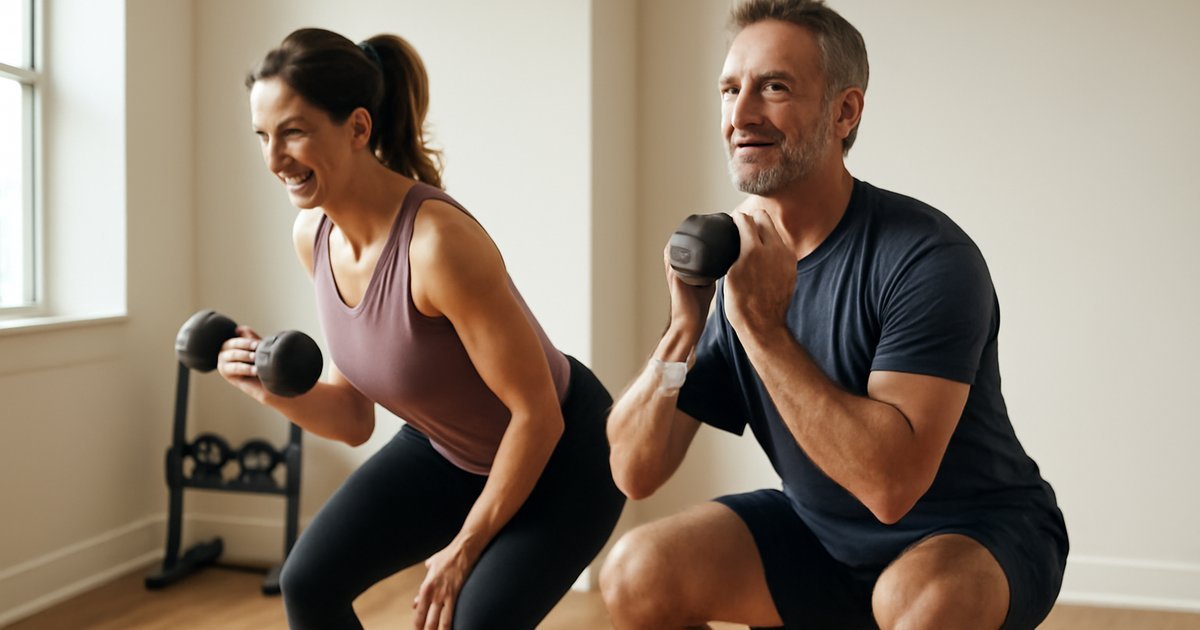
  • Dumbbell Workouts for Adults Over 40: Strength, Safety, and Results

    Dumbbell Workouts for Adults Over 40: Strength, Safety, and Results

    A pair of dumbbells and the right plan can transform your health after 40 — here’s exactly how to do it safely and effectively.

    When Marcus, 47, was told by his doctor that his bone density was declining and his muscle mass had dropped significantly since his mid-30s, he assumed the answer was an expensive gym membership or complicated equipment. Instead, his physical therapist handed him a pair of 15-pound dumbbells and a structured plan. Within six months, Marcus had not only reversed early signs of sarcopenia — the age-related loss of muscle mass — but had also improved his blood pressure and energy levels dramatically.

    His story is far from unusual. According to the CDC, adults lose 3 to 8 percent of their muscle mass per decade after age 30, with the rate accelerating significantly after 60. The good news? Research consistently shows that resistance training — including dumbbell workouts — can slow, halt, and even partially reverse this process at virtually any age.

    In this guide, you will learn why dumbbell training is one of the most effective and accessible fitness strategies for adults over 40, how to do it safely, which exercises deliver the most benefit, and how to build a routine that fits your real life.

    Why Dumbbell Training Matters More After 40

    After age 40, your body undergoes a series of physiological shifts that make strength training not just beneficial — but essential. Muscle tissue becomes harder to build and easier to lose. Bone density decreases. Metabolism slows. Joint stability can weaken. And without deliberate resistance training, these changes accelerate steadily with each passing decade.

    Dumbbells offer a unique advantage over machines or barbells for this age group: they require each limb to work independently, which means your body naturally corrects muscular imbalances — a critical benefit for adults who may have spent decades favoring one side of their body at work or in daily movement.

    A landmark study published in the Journal of Strength and Conditioning Research found that adults over 40 who performed structured dumbbell resistance training two to three times per week for 12 weeks showed significant improvements in lean muscle mass, functional strength, and self-reported quality of life compared to a control group.

    Clinical evidence also indicates that resistance training improves insulin sensitivity, supports cardiovascular health, reduces the risk of type 2 diabetes, and lowers markers of systemic inflammation — all conditions that become increasingly relevant in midlife and beyond.

    Health Benefits of Dumbbell Workouts After 40

    The benefits of consistent dumbbell training extend well beyond how you look or feel at the gym. According to the NIH’s National Institute on Aging, regular resistance exercise is one of the most powerful tools available for healthy aging — and here’s why:

    • Muscle preservation: Combats sarcopenia by stimulating muscle protein synthesis, keeping you stronger and more independent longer
    • Bone density support: Weight-bearing resistance exercise signals bones to maintain and even increase density, reducing fracture risk — particularly important for women approaching or past menopause
    • Metabolic health: Research suggests resistance training increases resting metabolic rate, helping manage weight even during hormonal shifts common after 40
    • Joint stability: Strengthening the muscles surrounding joints — especially knees, hips, and shoulders — reduces pain and injury risk
    • Blood sugar regulation: The American Diabetes Association recommends resistance training as a first-line strategy for managing and preventing type 2 diabetes
    • Mental health: A meta-analysis in JAMA Psychiatry found that resistance training significantly reduced symptoms of depression and anxiety in adults across age groups
    • Balance and fall prevention: Improved lower-body strength directly correlates with better balance, a critical concern for adults over 60 — the CDC reports that falls are the leading cause of injury-related death among older Americans

    This combination of benefits makes dumbbell training one of the most time-efficient and cost-effective health investments available to adults in midlife and beyond.

    Safety First: What to Know Before You Start

    Before picking up a single dumbbell, understanding how your body changes after 40 is critical to training smart rather than just training hard. Most physicians recommend getting medical clearance before starting a new exercise program, especially if you have a history of cardiovascular disease, orthopedic conditions, or diabetes.

    Key safety principles for adults over 40:

    • Start lighter than you think you need to: Your connective tissue — tendons and ligaments — adapts more slowly than muscle. Jumping to heavy weights before your joints are ready is the most common cause of injury in this age group
    • Prioritize form over load: A controlled repetition with a lighter weight is far more effective and safer than a sloppy rep with a heavy one
    • Warm up every single session: Spend 5 to 10 minutes with dynamic movement — arm circles, leg swings, light cardio — before any weighted exercise
    • Rest between sessions: Adults over 40 require more recovery time. Aim for at least 48 hours between training the same muscle groups
    • Listen to your body: Distinguish between productive muscle fatigue (normal) and sharp, joint-based pain (stop immediately)
    • Progress gradually: Most exercise physiologists recommend increasing weight by no more than 5 to 10 percent per week

    This varies from person to person — if you have a history of rotator cuff injury, lower back issues, or knee problems, working with a certified personal trainer or physical therapist initially is strongly recommended.

    The Best Dumbbell Exercises for Adults Over 40

    The following exercises are selected for their functional value, joint-friendliness, and evidence of effectiveness in midlife fitness research. They target the major muscle groups most important for everyday movement, posture, and long-term independence.

    Upper Body

    • Dumbbell Chest Press (lying or incline): Builds chest, shoulder, and tricep strength while being gentler on the wrists than a barbell variation
    • Bent-Over Dumbbell Row: Strengthens the upper and mid-back — muscles critical for posture, which naturally deteriorates with desk-based lifestyles common after 40
    • Dumbbell Shoulder Press (seated): Seated variation reduces spinal loading while still building shoulder stability and strength
    • Bicep Curl and Hammer Curl: Supports elbow joint health and functional arm strength for carrying, lifting, and pulling

    Lower Body

    • Goblet Squat: Holding a single dumbbell at chest height encourages an upright torso, reducing lower back strain compared to traditional back squats
    • Romanian Deadlift (RDL): One of the most effective hip-hinge movements for strengthening the hamstrings and glutes — muscles essential for lower back health
    • Dumbbell Reverse Lunge: Safer for knee joints than forward lunges, while still building quad and glute strength effectively
    • Lateral Step-Out with Dumbbell: Targets the gluteus medius — a muscle critical for hip stability and fall prevention in older adults

    Core and Stability

    • Dumbbell Deadbug: Challenges deep core stability without compressing the spine — ideal for adults with lower back sensitivity
    • Farmer’s Carry: Walking with dumbbells held at your sides builds grip strength, core stability, and posture simultaneously
    • Single-Arm Dumbbell Row (supported): Unilateral training challenges core stability while building back strength

    For a complementary low-impact approach on recovery days, consider exploring our guide on Stretching and Recovery After 40: Feel Better, Move Longer.

    Sample Dumbbell Workout Plan for Adults Over 40

    The following is a beginner-to-intermediate three-day-per-week full-body plan. Most exercise physiologists recommend full-body sessions over split routines for adults in this age group, as they allow more frequent muscle stimulation with adequate recovery time between sessions.

    Weekly Structure: Monday / Wednesday / Friday (or any three non-consecutive days)

    Session Duration: 35 to 50 minutes including warm-up and cool-down

    Day 1 — Full Body (Strength Focus)

    • Goblet Squat: 3 sets x 10-12 reps
    • Dumbbell Chest Press: 3 sets x 10-12 reps
    • Bent-Over Dumbbell Row: 3 sets x 10-12 reps (each side)
    • Romanian Deadlift: 3 sets x 10-12 reps
    • Dumbbell Shoulder Press (seated): 2 sets x 10 reps
    • Farmer’s Carry: 2 rounds x 30 seconds

    Day 2 — Full Body (Stability and Endurance Focus)

    • Reverse Lunge: 3 sets x 10 reps (each leg)
    • Single-Arm Dumbbell Row: 3 sets x 10 reps (each side)
    • Bicep Curl: 2 sets x 12 reps
    • Lateral Step-Out: 2 sets x 12 reps (each side)
    • Dumbbell Deadbug: 2 sets x 8 reps (each side)
    • Hammer Curl: 2 sets x 12 reps

    Day 3 — Full Body (Progressive Overload)

    • Goblet Squat (slight weight increase): 3 sets x 10 reps
    • Incline Dumbbell Press: 3 sets x 10 reps
    • Romanian Deadlift (slight weight increase): 3 sets x 10 reps
    • Seated Shoulder Press: 3 sets x 10 reps
    • Bent-Over Row: 3 sets x 10 reps
    • Farmer’s Carry: 3 rounds x 40 seconds

    On non-training days, light activity such as walking, stretching, or mobility work supports recovery without overtaxing the system. If you prefer to stay active without structured training on rest days, our guide on Interval Walking After 50: Boost Fitness, Heart Health and Energy offers an excellent complement to dumbbell training.

    How to Progress and Avoid Plateaus

    One of the most common mistakes adults over 40 make with dumbbell training is sticking with the same weight and rep scheme indefinitely. Without progressive overload — gradually increasing the challenge on your muscles over time — your body adapts and stops making gains.

    Research published in the European Journal of Sport Science confirms that progressive overload is the single most important variable in resistance training adaptation across all age groups, including older adults.

    Practical ways to apply progressive overload safely after 40:

    • Increase reps within your target range (e.g., 10 to 12 reps) before increasing weight
    • Add a fourth set to an exercise before moving to a heavier dumbbell
    • Slow down the lowering (eccentric) phase of each rep — this increases time under tension without requiring heavier weight
    • Reduce rest periods slightly to increase cardiovascular demand
    • Introduce single-leg or single-arm variations to increase difficulty without adding load

    Tracking your workouts — even in a simple notebook — makes it far easier to identify when it’s time to progress. This varies from person to person based on training history, recovery capacity, and overall health status.

    When to Call Your Doctor or Seek Professional Guidance

    Most healthy adults can begin a moderate dumbbell training program without medical clearance, but there are important exceptions and warning signs to take seriously.

    Seek medical guidance before starting if you have:

    • A recent cardiac event, chest pain, or uncontrolled high blood pressure
    • Active joint inflammation (rheumatoid arthritis flare, acute bursitis)
    • Unmanaged diabetes with blood sugar instability
    • Recent surgery or injury affecting any major joint
    • Severe osteoporosis diagnosed by your physician

    Stop exercising immediately and seek care if you experience:

    • Chest pain, pressure, or tightness during or after exercise
    • Shortness of breath that is disproportionate to your effort level
    • Dizziness, lightheadedness, or fainting
    • Sharp, sudden pain in any joint or muscle
    • Heart palpitations that feel irregular or prolonged

    At your next routine checkup, let your doctor know you are beginning or progressing a resistance training program. Most physicians strongly support this choice and can help tailor recommendations based on any underlying health conditions you may be managing.

    Frequently Asked Questions

    How heavy should my dumbbells be if I’m just starting out over 40?

    Most beginners over 40 do well starting with lighter weights that allow them to complete 10 to 12 repetitions with good form and mild effort — typically 5 to 15 pounds for upper body exercises and 10 to 25 pounds for lower body movements. The right weight is one where the last two or three reps feel challenging but not painful. This varies significantly from person to person based on prior activity level.

    How long before I see results from dumbbell training?

    Research suggests most adults begin noticing improvements in strength and energy within three to four weeks of consistent training, with visible muscle changes typically occurring between six and twelve weeks. Consistency matters far more than intensity, especially in the early stages.

    Can dumbbell training help with weight loss after 40?

    Clinical evidence indicates that resistance training supports healthy body composition by preserving and building muscle tissue, which raises resting metabolic rate. While dumbbells alone are not a weight loss tool, combined with appropriate nutrition and cardiovascular activity, they contribute meaningfully to fat loss and body recomposition in midlife adults.

    Is it safe to do dumbbell workouts with arthritis?

    Many people with mild to moderate osteoarthritis benefit significantly from resistance training, as stronger surrounding muscles reduce stress on affected joints. However, it is essential to consult your rheumatologist or orthopedic physician before starting. Exercise during acute flare-ups is generally not recommended.

    Do I need a gym to get effective results from dumbbell training?

    Not at all. A set of adjustable dumbbells or a few pairs of fixed-weight dumbbells at home is all the equipment you need to run an effective, progressive strength training program. Many adults over 40 find home-based training more sustainable than gym memberships. For more on training at home effectively, see our guide on Home Workouts for Adults Over 50: No Gym Required.

    Conclusion

    Dumbbell training is one of the most evidence-backed, accessible, and adaptable fitness strategies available to adults navigating the physical realities of midlife. Whether you’re managing early signs of muscle loss, looking to protect your bone density, improve your metabolic health, or simply feel stronger and more capable in daily life, a consistent dumbbell program delivers measurable results.

    You don’t need expensive equipment, a gym membership, or hours of free time. You need a plan, safe progression, and the commitment to show up consistently. Start where you are, respect your body’s signals, and let the evidence guide your approach. Your strongest, healthiest decades may still be ahead of you.

    This article is for informational and educational purposes only. It does not constitute medical advice, diagnosis, or treatment. Always consult your physician or a qualified healthcare provider before making changes to your health routine or treatment plan.

    Medically reviewed by our editorial health team. Content follows evidence-based standards aligned with CDC and NIH guidelines.
  • Rowing Machine Workouts After 40: Full-Body Fitness Guide

    Rowing Machine Workouts After 40: Full-Body Fitness Guide

    Rowing Machine Workouts After 40: Full-Body Fitness Guide

    Low-impact, high-reward: why the rowing machine may be the most underrated fitness tool for adults over 40.

    Introduction

    Michael, 54, had tried everything — treadmill running left his knees aching, and lifting weights without a trainer felt intimidating. His physical therapist suggested something unexpected: the rowing machine in the corner of his gym that almost nobody used. Within eight weeks, his resting heart rate dropped, his back pain eased, and he was completing 20-minute sessions without stopping.

    Michael’s experience isn’t unusual. According to the American Heart Association, fewer than 25% of US adults meet both aerobic and muscle-strengthening guidelines — a gap that widens significantly after age 40. The rowing machine, often overlooked in favor of treadmills or ellipticals, may be one of the most efficient tools available for adults looking to improve cardiovascular health, build functional strength, and protect aging joints — all at once.

    In this guide, you’ll learn exactly what rowing workouts can do for your body after 40, how to start safely, and how to build a routine that sticks — whether you’re completely new to exercise or returning after a long break.

    What Is Rowing Machine Exercise?

    A rowing machine — also called an ergometer or "erg" — simulates the motion of rowing a boat on water. Unlike most cardio machines that focus primarily on the lower body, rowing engages approximately 86% of the major muscle groups in a single, coordinated movement, according to research published in the Journal of Sports Science and Medicine.

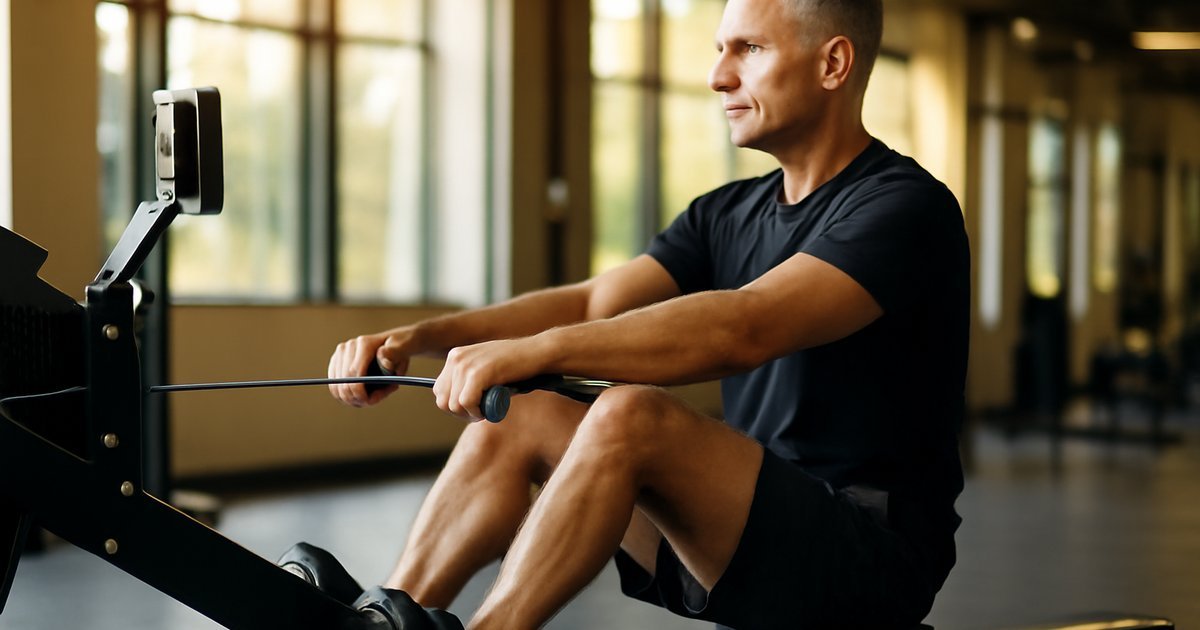
    Each rowing stroke is divided into four phases: the catch (starting position), the drive (pushing with legs), the finish (leaning back and pulling the handle to your chest), and the recovery (returning to the start). Mastering this sequence turns what looks like a simple pull-and-push motion into a full-body workout.

    The Centers for Disease Control and Prevention (CDC) classifies rowing as a vigorous-intensity aerobic activity when performed at a sustained pace — meaning it counts toward both weekly cardio and muscle-strengthening recommendations simultaneously. That double benefit makes it especially valuable for time-pressed adults over 40 who need efficiency from every workout.

    Because rowing is seated and non-weight-bearing on the joints of the knees and hips in the same way running is, it’s considered low-impact — a crucial factor for adults managing arthritis, previous injuries, or joint sensitivity that tends to increase with age.

    Health Benefits Specifically for Adults Over 40

    The benefits of rowing extend well beyond burning calories. Clinical evidence and exercise physiology research point to a wide range of improvements that are particularly meaningful as the body ages.

    Cardiovascular health: A 2022 study published in the European Journal of Preventive Cardiology found that consistent low-to-moderate intensity rowing improved VO2 max — a measure of cardiovascular fitness — by an average of 14% in adults over 45 after 12 weeks of training. VO2 max naturally declines with age, and preserving it is strongly associated with longevity and reduced heart disease risk.

    Muscle preservation: After age 40, adults lose approximately 1-2% of muscle mass per year, a process called sarcopenia. The NIH National Institute on Aging identifies resistance-based exercise as the primary countermeasure. Because rowing engages the quads, hamstrings, glutes, back, core, and arms under load, it provides a meaningful muscle-preservation stimulus — something most pure cardio machines cannot offer.

    Back and posture support: Clinical evidence suggests rowing strengthens the erector spinae and rhomboid muscles, which support spinal alignment. Many physical therapists incorporate rowing mechanics into rehabilitation programs for adults with lower back pain — though individual cases vary, and you should always consult your physician before starting if you have a back condition.

    Mental health: The rhythmic, repetitive nature of rowing has been linked to reduced cortisol levels and improved mood. Research from Harvard Health suggests that rhythmic aerobic exercise may be particularly effective at reducing anxiety and depression symptoms in midlife adults.

    Weight management: A 155-pound adult can burn approximately 260-316 calories in 30 minutes of moderate rowing, according to the Harvard Medical School calorie chart — comparable to cycling or swimming, with less joint stress than running.

    Signs You’re Ready — and Signs to Pause

    Rowing is accessible to most adults, but it’s not one-size-fits-all. Understanding both readiness signals and warning signs helps you start safely.

    You may be ready to start rowing if you:

    • Have clearance from your physician for moderate aerobic activity
    • Can sit upright with reasonable comfort for 15-20 minutes
    • Have no acute lower back injury or disc herniation flare-up
    • Are able to bend your knees and hips through a moderate range of motion
    • Have managed any cardiovascular conditions with your care team

    Pause and consult your doctor first if you experience any of the following during or after exercise:

    • Chest pain, tightness, or pressure during activity
    • Dizziness, lightheadedness, or near-fainting
    • Sudden shortness of breath disproportionate to effort
    • Sharp or radiating back pain, especially down one leg
    • Heart palpitations or irregular heartbeat
    • Severe joint swelling after workouts

    The American College of Sports Medicine (ACSM) recommends that previously sedentary adults over 45 undergo a medical evaluation before beginning vigorous-intensity exercise programs. This varies from person to person — discuss your specific history with your healthcare provider.

    Causes of Common Rowing Mistakes — and How to Avoid Them

    Most rowing injuries are technique-related, not inherent to the exercise itself. Understanding the biomechanics protects you from the most common pitfalls.

    Using the arms too early: Many beginners pull with their arms before fully extending the legs. This overloads the lower back and reduces power. The correct sequence is legs first (about 60% of power), then core lean back, then arms — in that exact order.

    Rounding the lower back: Collapsing the spine forward at the catch position is the leading cause of rowing-related lower back strain. Engage your core before each drive phase and maintain a tall, neutral spine throughout.

    Gripping too tightly: A death grip on the handle causes forearm fatigue and can aggravate wrist or elbow tenderness. Hold the handle loosely — your fingers should do the work, not your palm.

    Rushing the recovery: Rowing at a sustainable pace — not rushing back to the catch — allows your cardiovascular system to recover between strokes and reduces cumulative fatigue. Research suggests that a 1:2 drive-to-recovery ratio is optimal for endurance sessions.

    Sliding too far on the seat: Adults with limited hip flexibility may over-compress at the catch, stressing the knees. If your heels lift off the footrest, stop short of that point. Most rowing coaches recommend stopping when your shins are vertical — a safe, strong catch position for most adults.

    How to Start: A 6-Week Rowing Plan for Adults Over 40

    The following program is designed for adults who are new to rowing or returning after a long break. It prioritizes technique over intensity in the first two weeks, then gradually builds duration and effort. This varies from person to person — adjust based on how your body responds.

    Weeks 1-2: Technique Foundation
    Row 3 days per week. Each session: 5-minute warm-up walk or easy cycling, then 10-15 minutes of rowing at an easy pace (a stroke rate of 18-20 strokes per minute). Focus entirely on form. End with 5 minutes of gentle stretching. Rest at least one day between sessions.

    Weeks 3-4: Building Duration
    Increase to 20-25 minutes of continuous rowing. Maintain a moderate effort level — you should be able to speak in short sentences but feel your breathing elevated. Most physicians describe this as a "conversational pace." Row 3-4 days per week.

    Weeks 5-6: Adding Intervals
    Introduce simple interval training: 3 minutes at moderate effort, 1 minute at easier pace, repeated 5-6 times. This approach mimics the benefits of high-intensity interval training (HIIT) without requiring maximum exertion, making it appropriate for most adults managing cardiovascular or metabolic conditions. Always consult your physician before adding interval training if you have a heart condition.

    You may also find it helpful to complement your rowing routine with other low-impact fitness approaches. Our guide to Stretching and Recovery After 40 offers practical techniques to improve flexibility between rowing sessions, and Bodyweight Training After 40 can help build the core and leg strength that makes rowing more efficient and comfortable.

    Living With a Rowing Routine: Day-to-Day Management

    Consistency, not intensity, is the key to results for adults over 40. Clinical evidence from the NIH’s National Institute on Aging consistently shows that moderate, regular exercise produces greater long-term health benefits than sporadic intense effort — particularly for adults managing chronic conditions.

    Warm up deliberately: Spend 3-5 minutes rowing at a very easy pace before increasing effort. This warms joint fluid, raises core temperature, and reduces injury risk — especially important on mornings when muscles feel stiff.

    Track your effort by feel: Instead of focusing on speed or power output, use the Rate of Perceived Exertion (RPE) scale. On a scale of 1-10, target an RPE of 5-6 for steady-state sessions and 7-8 for interval work. Your physician may give you a target heart rate range — use that as your primary guide if available.

    Allow adequate recovery: Muscle repair and cardiovascular adaptation happen during rest, not during the workout itself. Most exercise physiologists recommend at least one full rest day between rowing sessions for adults over 40, particularly in the first month.

    Hydrate proactively: Rowing is sweat-producing even though you’re seated. Drink 8-16 ounces of water before your session and sip throughout. Adults over 50 have a reduced thirst response, meaning dehydration can occur before you feel thirsty — a finding supported by research from the Journal of the American Geriatrics Society.

    Pair rowing with strength work: On non-rowing days, light resistance training — particularly for the upper back, hip flexors, and core — reinforces the muscles used in rowing and reduces the risk of overuse imbalance. If you’re looking for a starting point, our guide to Bodyweight Training After 40 provides a safe, progressive approach.

    For adults who prefer outdoor activity on alternate days, Interval Walking After 50 pairs extremely well with indoor rowing as a complementary low-impact cardio option.

    When to Call Your Doctor — Emergency Warning Signs

    While rowing is generally safe for most adults, certain symptoms require immediate attention.

    Call 911 immediately if you experience:

    • Chest pain, pressure, or tightness during or after exercise
    • Sudden severe shortness of breath at rest or with minimal activity
    • Fainting or loss of consciousness
    • Sudden severe headache or vision changes
    • One-sided weakness, facial drooping, or difficulty speaking (signs of stroke — call 911 immediately)

    Schedule a non-emergency appointment if you notice:

    • Persistent lower back or knee pain that doesn’t resolve within 48-72 hours of rest
    • Unusual fatigue that worsens over multiple sessions rather than improving
    • Consistent muscle soreness that doesn’t decrease over two or more weeks
    • Significant swelling in any joint after workouts

    What to tell your doctor at your next visit: Bring a simple log of your workouts — duration, perceived effort, and any symptoms you noticed. This gives your physician the context needed to guide your program safely.

    Frequently Asked Questions

    Is rowing safe if I have lower back pain?
    This depends on the cause and severity of your back condition. Clinical evidence suggests that rowing, when performed with proper technique, can actually strengthen the muscles that support the spine. However, certain conditions — such as acute disc herniation or spinal stenosis — may make rowing inappropriate or require modification. Always consult your physician or physical therapist before rowing if you have an existing back diagnosis.

    How many days a week should I row?
    Most exercise physiologists and the American College of Sports Medicine recommend 3-4 days per week for adults new to rowing, with at least one rest day between sessions. This frequency allows adequate recovery while providing enough stimulus for cardiovascular and muscular adaptation. This varies from person to person based on fitness level and health status.

    Can I lose weight with rowing alone?
    Rowing burns significant calories and builds muscle — both of which support weight management. However, clinical evidence consistently indicates that sustainable weight loss requires a combination of regular physical activity and appropriate dietary changes. Research suggests that exercise alone, without addressing caloric intake, typically produces modest weight loss in most adults. Your healthcare provider or a registered dietitian can help you create a comprehensive plan.

    What’s the difference between a Concept2 rower and a magnetic rower?
    The Concept2 uses air resistance, which increases naturally as you row harder — making it the gold standard in gyms and clinical research settings. Magnetic rowers use preset resistance levels and are typically quieter and lower in cost, making them popular for home use. Both are effective for cardiovascular fitness. If you’re tracking performance metrics over time, the Concept2’s monitoring system is more precise, but either type is appropriate for general fitness purposes.

    Is rowing better than cycling for adults over 40?
    Both are excellent low-impact options. The key difference is that rowing also engages the upper body and core significantly, making it a more comprehensive full-body workout. Cycling is generally easier to learn for complete beginners and may be preferable for adults with significant knee issues that limit hip flexion. Research suggests that the best exercise is the one you’ll perform consistently — so individual preference and comfort matter as much as theoretical advantages.

    Conclusion

    The rowing machine is one of the most efficient and adaptable fitness tools available to adults over 40 — offering cardiovascular conditioning, muscle preservation, back support, and mental health benefits in a single, low-impact session. Michael, like thousands of adults, discovered that a machine gathering dust in the corner of the gym could be the cornerstone of a sustainable fitness routine.

    Starting slowly, mastering proper technique, and progressing gradually are the foundations of a safe and rewarding rowing practice. The evidence is clear: consistent moderate exercise at this stage of life makes a measurable difference in longevity, quality of life, and chronic disease management.

    Talk to your healthcare provider about whether rowing is appropriate for your specific health profile, and consider working with a certified fitness professional in your first few sessions to build confidence and proper form. You don’t need to row fast — you just need to row consistently.


    Medical Disclaimer: This article is for informational and educational purposes only. It does not constitute medical advice, diagnosis, or treatment. Always consult your physician or a qualified healthcare provider before making changes to your health routine or treatment plan.

    Medically reviewed by our editorial health team. Content follows evidence-based standards aligned with CDC and NIH guidelines.