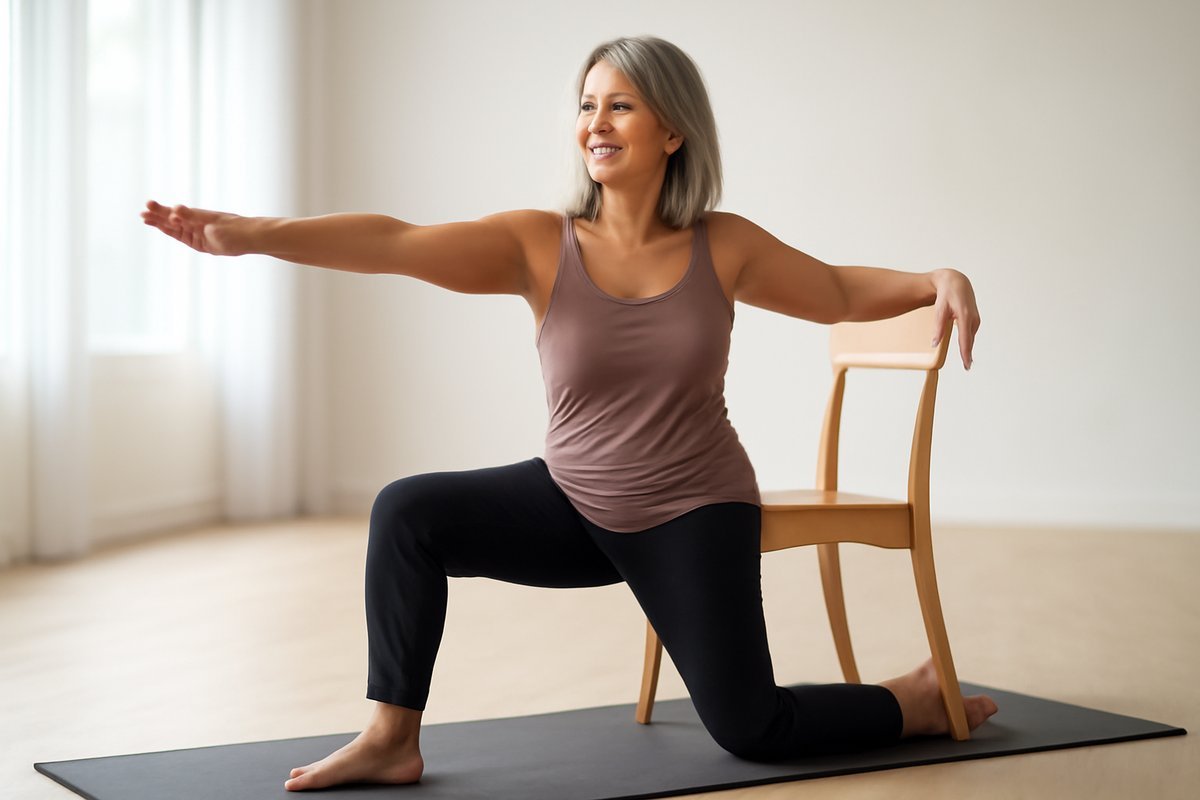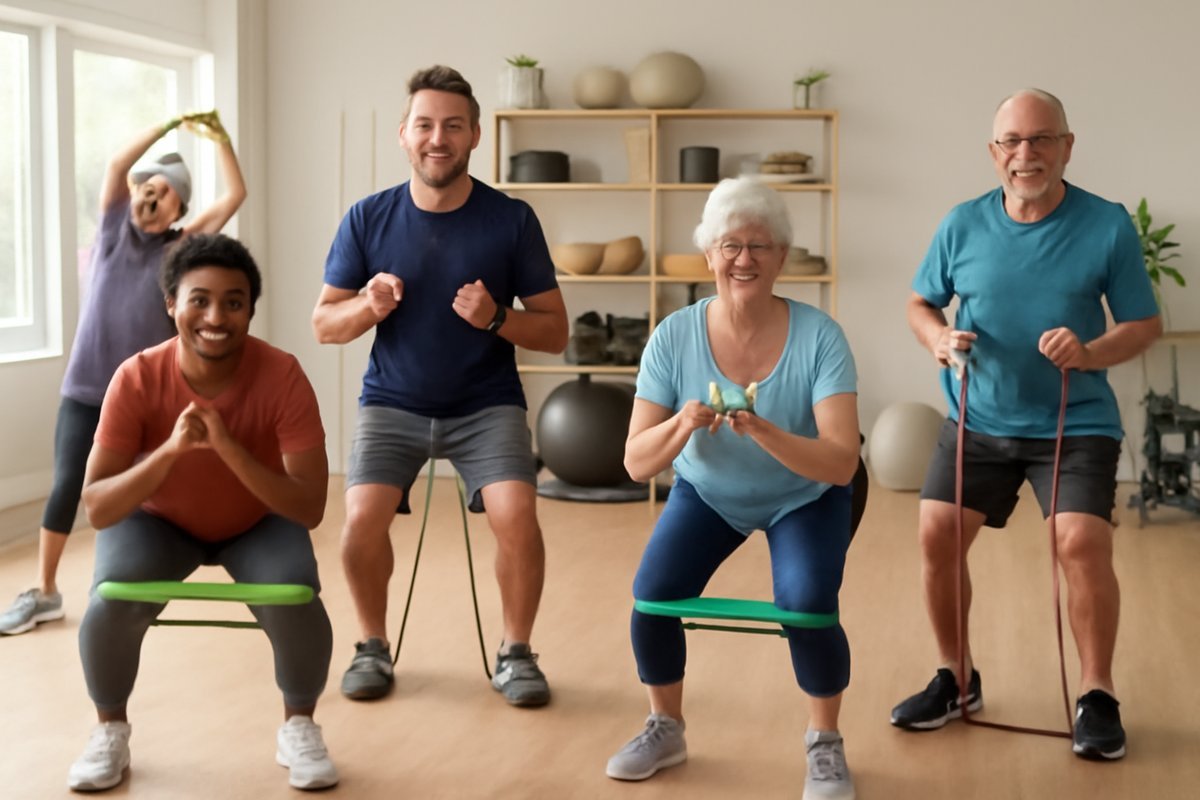
Discover how these versatile tools can transform your fitness journey, offering effective strength training and improved flexibility without heavy weights.
David, a 62-year-old retired teacher, found himself struggling with daily tasks. Lifting groceries felt like a monumental effort, and his once-vibrant golf swing was gone. He knew he needed to build strength but was wary of heavy gym equipment, fearing injury. Then, his doctor suggested resistance bands, a simple, portable, and effective solution. David discovered that these elastic tools offered a gentle yet powerful path to regaining his strength and mobility, proving that effective workouts don’t always require iron and expensive gym memberships.
According to the Centers for Disease Control and Prevention (CDC), nearly 80% of American adults do not meet the recommended guidelines for both aerobic and muscle-strengthening activities. This lack of physical activity contributes to a wide range of health issues, including heart disease, type 2 diabetes, and age-related muscle loss known as sarcopenia. You might be looking for a way to incorporate more strength training into your life, but perhaps traditional weights feel intimidating, or you need a more joint-friendly option.
This comprehensive guide will explore the world of resistance band workouts, explaining what they are, their significant benefits for adults of all ages, and how to safely integrate them into your fitness routine. You will learn about selecting the right bands, mastering proper form, and building a balanced exercise program that supports your long-term health and well-being. Whether you’re a seasoned exerciser or just starting, resistance bands offer an accessible and effective pathway to a stronger, more mobile you.
What Are Resistance Bands?
Resistance bands are elastic straps or loops made from latex or non-latex materials, designed to create tension when stretched. This tension provides resistance, challenging your muscles similar to how free weights or gym machines would. Unlike weights, however, the resistance from bands can be more progressive, increasing as the band is stretched further, which can be particularly beneficial for specific movements and rehabilitation.
These versatile tools come in various forms, including loop bands (often used for lower body and glute exercises), tube bands with handles (great for upper body and full-body movements), and flat bands (excellent for flexibility and lighter resistance work). Their portability makes them ideal for home workouts, travel, or supplementing gym routines. Historically, resistance bands gained prominence in physical therapy settings in the early 2000s, serving as a low-impact method for muscle rehabilitation and strength building.
For adults across the US, integrating resistance bands into a fitness regimen is particularly relevant. The National Institutes of Health (NIH) emphasizes the importance of strength training for maintaining muscle mass and bone density, especially as we age. Resistance bands offer an effective way to meet these guidelines without the high impact or potential intimidation of traditional weightlifting. They empower you to train effectively, whether you’re managing a chronic condition, recovering from an injury, or simply seeking to enhance your overall fitness from the comfort of your home.
The Benefits of Resistance Band Training
Resistance band training offers a wealth of advantages, making it an excellent choice for individuals seeking effective and accessible workouts. These benefits extend beyond just muscle building, contributing significantly to overall health and functional fitness.
-
Increased Muscle Strength and Endurance: Resistance bands engage your muscles through a full range of motion, providing continuous tension. This helps build both strength and muscular endurance, making daily activities easier and improving athletic performance. A meta-analysis published in the *Journal of Sports Sciences* when this topic was first researched concluded that resistance band training is as effective as conventional weight training in improving strength, especially in untrained individuals.
-
Improved Joint Health and Low Impact: The elastic nature of bands provides resistance without the jarring impact often associated with free weights. This makes them ideal for individuals with joint pain, arthritis, or those recovering from injuries, allowing for low-impact exercise that protects delicate joints.
-
Enhanced Stability and Balance: Many resistance band exercises require you to stabilize your body, engaging smaller, often overlooked muscles. This activation of stabilizing muscles improves overall balance and proprioception, which is crucial for preventing falls, particularly as you get older.
-
Increased Flexibility and Mobility: Bands can be incorporated into stretching routines, helping to deepen stretches and improve range of motion. This contributes to better flexibility and mobility training, reducing stiffness and enhancing functional movement.
-
Versatility and Portability: Resistance bands are lightweight, compact, and highly versatile. They can be used to target nearly every muscle group, adapting to various exercises and fitness levels. Their portability means you can work out virtually anywhere, from your living room to a hotel room.
-
Affordability: Compared to expensive gym memberships or home gym equipment, resistance bands are a cost-effective fitness solution, making strength training accessible to a broader population.
These benefits collectively contribute to a stronger, more resilient body, promoting independence and quality of life for years to come. The ability to safely and effectively strengthen muscles and improve mobility makes resistance bands an invaluable tool in any adult’s fitness arsenal.
Who Can Benefit and Key Considerations
Resistance bands are remarkably adaptable, making them suitable for a diverse range of individuals, from those new to exercise to seasoned athletes. Their design allows for progressive resistance, meaning you can easily adjust the intensity by choosing different band strengths or altering your grip and stance. This adaptability is a key reason why they are so beneficial for US adults across various fitness levels and health profiles.
Who can benefit?
-
Beginners and those returning to exercise: Bands provide a safe entry point into strength training, allowing you to learn proper movement patterns and build foundational strength without excessive strain.
-
Older adults: As we age, maintaining muscle mass and bone density becomes critical. Resistance bands offer a gentle yet effective way to combat sarcopenia (age-related muscle loss) and osteoporosis, improving functional strength and reducing fall risk. According to the CDC, approximately 1 in 4 adults aged 65 and older falls each year, and strengthening exercises, including those with resistance bands, are a proven prevention strategy.
-
Individuals with joint pain or recovering from injury: The low-impact nature of bands reduces stress on joints, making them an excellent choice for those managing arthritis, recovering from surgery, or dealing with chronic pain. Always consult your doctor or physical therapist before starting any new exercise program if you have an injury or chronic condition.
-
Busy individuals: Their portability and effectiveness for full-body workouts make them perfect for anyone with limited time or space for exercise. You can get a comprehensive workout in under 30 minutes at home.
-
Individuals enhancing other sports: Athletes often use resistance bands for warm-ups, specific muscle activation, and power training to complement their main sport.
Key Considerations:
-
Latex Allergies: If you have a latex allergy, ensure you purchase latex-free resistance bands, which are widely available.
-
Band Quality: Invest in high-quality bands that are durable and less likely to snap. Inspect your bands regularly for tears or wear before each use.
-
Progressive Overload: To continue making progress, you’ll need to increase the resistance over time. This can be done by using a stronger band, combining bands, or increasing repetitions and sets.
-
Anchor Points: Some exercises require anchoring the band to a sturdy object. Ensure your anchor point is secure and won’t move during your workout to prevent injury.
By understanding who can benefit and keeping these considerations in mind, you can safely and effectively integrate resistance bands into a fulfilling and health-promoting fitness routine.
Getting Started: Choosing Your Bands and Proper Form
Embarking on a resistance band workout journey is straightforward, but selecting the right equipment and mastering proper form are crucial for both effectiveness and safety. Thinking about these foundational steps will ensure a rewarding experience, preventing common mistakes and maximizing your results.
Choosing Your Resistance Bands:
Resistance bands are color-coded, with each color typically indicating a different level of resistance. While specific colors may vary by brand, a general guide is:
-
Light colors (yellow, red): Lighter resistance, great for beginners, rehabilitation, and high-repetition exercises.
-
Medium colors (green, blue): Moderate resistance, suitable for intermediate exercisers and a good all-around choice for many movements.
-
Dark colors (black, purple): Heavy resistance, for advanced users or specific exercises targeting larger muscle groups.
-
Extra heavy (silver, gold): Very heavy resistance, for strength athletes or very specific movements.
It’s advisable to purchase a set of bands with varying resistance levels. This allows you to select the appropriate band for different exercises and muscle groups, as well as to progress as your strength improves. For instance, you might use a lighter band for overhead presses and a heavier one for squats or glute bridges.
Mastering Proper Form:
Correct form is paramount to prevent injury and ensure your muscles are effectively engaged. Here are key principles to follow:
-
Start Slow: Begin with lighter resistance to focus on learning the movement pattern. It’s better to use less resistance with perfect form than struggle with a heavy band and compromise your technique.
-
Engage Your Core: For most exercises, keeping your abdominal muscles lightly engaged will protect your spine and provide stability. This is similar to the principles applied in core training.
-
Control the Movement: Don’t let the band snap back quickly. Control both the stretching (concentric) and returning (eccentric) phases of the exercise. The eccentric phase, where the muscle lengthens under tension, is crucial for muscle growth and injury prevention.
-
Maintain Tension: Avoid slack in the band. Keep a slight tension even at the starting position to continuously challenge your muscles.
-
Breathe Properly: Exhale on exertion (when you push or pull) and inhale as you return to the starting position.
-
Listen to Your Body: If you feel sharp pain, stop immediately. Mild muscle fatigue or a burning sensation is normal, but pain is a warning sign.
Many online resources, including videos from reputable fitness experts and physical therapists, can demonstrate proper form for various exercises. Watching and emulating these demonstrations can greatly enhance your understanding and execution.
Essential Resistance Band Exercises for Full-Body Strength
Resistance bands can effectively target every major muscle group, providing a comprehensive full-body workout. Here are some foundational exercises, categorized by muscle group, that you can incorporate into your routine. Remember to focus on controlled movements and proper form.
Lower Body and Glutes:
-
Band Squats: Place a loop band around your thighs, just above your knees. Stand with feet shoulder-width apart, toes slightly out. Keeping your chest up and core engaged, push your hips back and bend your knees as if sitting in a chair. Ensure your knees track over your toes. The band will resist your knees from caving in, activating your glutes. Perform 3 sets of 10-15 repetitions.
-
Glute Bridges: Lie on your back with knees bent, feet flat on the floor, hip-width apart. Place a loop band around your thighs. Press through your heels and lift your hips off the floor until your body forms a straight line from shoulders to knees. Squeeze your glutes at the top, pushing against the band. Lower slowly. Perform 3 sets of 12-18 repetitions.
-
Band Walks (Lateral & Monster): For lateral walks, place a loop band around your ankles or just above your knees. Stand with feet hip-width apart, knees slightly bent, and take small, controlled steps to the side, maintaining tension in the band. For monster walks, perform the same motion but step diagonally forward and out. These are excellent for hip abductor strength, crucial for stability. Perform 2-3 sets of 10-15 steps in each direction.
Upper Body:
-
Band Rows: Sit on the floor with legs extended, or stand with feet shoulder-width apart. Loop a resistance band around your feet, holding an end in each hand. Keep your back straight, core engaged. Pull the band towards your chest, squeezing your shoulder blades together. Slowly release. This works your back muscles. Perform 3 sets of 10-15 repetitions.
-
Overhead Press: Stand on the middle of a tube band with handles, feet shoulder-width apart. Hold a handle in each hand at shoulder height, palms forward. Press your hands straight overhead, extending your arms. Control the descent. This targets your shoulders and triceps. Perform 3 sets of 10-12 repetitions.
-
Bicep Curls: Stand on the middle of a tube band, feet hip-width apart, holding a handle in each hand, palms forward. Keeping your elbows tucked into your sides, curl your hands towards your shoulders, squeezing your biceps. Slowly lower. Perform 3 sets of 10-15 repetitions.
Core and Stability:
-
Pallof Press: Anchor a resistance band to a sturdy object at chest height. Stand perpendicular to the anchor point, grasping the band with both hands at your chest. Step away to create tension. Keeping your core tight and hips stable, press the band straight out in front of you, resisting the band’s pull to twist your torso. Hold for a moment, then slowly return. This powerfully engages your core’s anti-rotational muscles. Perform 3 sets of 8-12 repetitions per side.
-
Band Plank: Get into a plank position with a loop band around your ankles. Maintain a straight line from head to heels, engaging your core. The band adds an extra challenge to stabilize your legs and hips. Hold for 30-60 seconds, 3 sets.
For each exercise, select a band that allows you to complete the prescribed repetitions with good form, feeling challenged by the last few reps. As you get stronger, progress to a heavier band or increase your repetitions and sets. Evidence from the American College of Sports Medicine (ACSM) consistently highlights that resistance training, regardless of equipment, builds muscle and strength, crucial for combating age-related decline.
Building Your Resistance Band Routine & Injury Prevention
Creating a structured resistance band routine is key to consistent progress and long-term success. While spontaneity is great, a plan ensures you hit all major muscle groups and progressively challenge your body. Alongside routine building, prioritizing injury prevention is paramount to maintaining an active and healthy lifestyle.
Building Your Routine:
-
Frequency: Aim for 2-3 full-body resistance band workouts per week on non-consecutive days. This allows your muscles adequate time to recover and rebuild.
-
Warm-up: Always start with 5-10 minutes of light cardio (like brisk walking or marching in place) and dynamic stretches (arm circles, leg swings). This prepares your muscles and joints for activity.
-
Workout Structure: For each major muscle group (chest, back, shoulders, arms, legs, core), choose 1-2 exercises. Perform 2-3 sets of 10-15 repetitions. As you get stronger, you can increase repetitions, sets, or move to a stronger band.
-
Cool-down: Conclude your workout with 5-10 minutes of static stretching, holding each stretch for 20-30 seconds. This helps improve flexibility and aids in muscle recovery.
-
Progressive Overload: To continue gaining strength, gradually increase the challenge. This might mean using a band with higher resistance, performing more repetitions or sets, or reducing rest time between sets. Consistency is more important than intensity in the beginning.
-
Variety: Don’t be afraid to switch up your exercises every 4-6 weeks to keep your muscles challenged and prevent plateaus. There are numerous resistance band exercises available for every body part.
Injury Prevention Strategies:
-
Proper Form: As discussed, this is the single most important factor. If your form breaks down, reduce the resistance or take a rest.
-
Inspect Bands: Before each use, quickly check your bands for any nicks, tears, or signs of wear. A damaged band can snap, potentially causing injury.
-
Secure Anchoring: If an exercise requires anchoring the band to a door or post, ensure it is absolutely secure and stable. Never use a flimsy object as an anchor.
-
Listen to Your Body: Distinguish between muscle fatigue and pain. Muscle fatigue or a mild burn is normal. Sharp, shooting, or persistent pain is not. Stop if you experience pain.
-
Hydration and Nutrition: Support your workouts with adequate hydration and a balanced diet rich in lean protein for muscle repair and carbohydrates for energy.
By thoughtfully planning your routine and diligently applying these prevention strategies, you can safely and effectively harness the power of resistance bands to build lasting strength and improve your overall fitness.
When to Consult Your Doctor About Exercise Pain or Limitations
While resistance band training is generally safe and low-impact, it’s crucial to know when to seek professional medical advice. Distinguishing between normal muscle soreness and a potential injury can prevent minor issues from becoming serious complications. Your doctor or a qualified healthcare provider is your best resource for personalized guidance.
You should consult your doctor immediately if you experience any of the following during or after resistance band exercises:
-
Sharp, sudden pain: Especially if it occurs during a specific movement and doesn’t subside quickly.
-
Joint pain that persists: If pain in a joint (knee, shoulder, hip) continues for more than a day or two after exercise, or if it worsens with movement.
-
Swelling or bruising: Unexplained swelling, bruising, or redness around a joint or muscle can indicate an injury.
-
Numbness, tingling, or weakness: These sensations, particularly radiating down an arm or leg, could signal nerve involvement.
-
Inability to bear weight or move a limb: Any significant loss of function requires immediate medical attention.
-
Chest pain, dizziness, or shortness of breath: These symptoms, especially during exercise, are serious and warrant emergency medical evaluation.
-
Pain that interrupts sleep: Persistent pain that wakes you up at night or makes it difficult to get comfortable is a red flag.
When to discuss exercise limitations or concerns at your next doctor’s visit:
-
Chronic soreness: If you’re consistently sore for more than 48-72 hours after workouts, you might be overtraining or need to adjust your intensity.
-
Lack of progress: If you’ve been consistent with your routine but aren’t seeing improvements in strength or endurance over several weeks, your doctor might offer insights or suggest consulting a physical therapist.
-
Pre-existing conditions: If you have heart disease, diabetes, osteoporosis, or other chronic conditions, always discuss your exercise plan with your doctor. They can advise on safe modifications and intensity levels specific to your health status.
-
Unexplained fatigue: Persistent fatigue that isn’t resolved with rest might indicate an underlying issue that needs medical attention.
Being proactive about your health means not only exercising regularly but also recognizing when professional medical intervention is necessary. Don’t hesitate to reach out to your healthcare provider with any concerns about your fitness routine or any pain you experience.
Frequently Asked Questions
Q1: Are resistance bands as effective as weights for building muscle?
A1: Yes, for many individuals, especially beginners and intermediate exercisers, resistance bands can be just as effective as free weights for building muscle strength and size. Clinical studies when resistance bands were first widely studied have shown comparable results in muscle activation and strength gains. The key is to apply progressive overload, meaning you continually challenge your muscles by increasing resistance or repetitions as you get stronger.
Q2: How do I choose the right resistance level for my bands?
A2: Start with a band that allows you to complete 10-15 repetitions of an exercise with good form, feeling challenged by the last 2-3 reps. If you can easily do more than 15 reps, move to a stronger band. If you struggle to reach 8-10 reps with proper form, use a lighter band. It’s common to use different resistance levels for different muscle groups; your legs might handle a heavier band than your arms.
Q3: Can resistance bands help with weight loss?
A3: Resistance band training, like other forms of strength training, contributes to weight loss by building muscle mass. Muscle tissue burns more calories at rest than fat tissue, boosting your metabolism. While cardio is excellent for burning calories during exercise, strength training with bands helps create a metabolic environment conducive to long-term fat loss when combined with a healthy diet.
Q4: How often should I use resistance bands?
A4: Most experts recommend 2-3 full-body resistance training sessions per week, with at least one day of rest between sessions for muscle recovery and growth. If you split your workouts (e.g., upper body one day, lower body another), you might train more frequently, but always ensure adequate rest for each muscle group.
Q5: Are resistance bands safe for older adults?
A5: Absolutely. Resistance bands are particularly beneficial for older adults due to their low-impact nature, which is gentle on joints. They provide a safe and effective way to combat age-related muscle loss (sarcopenia), improve bone density, enhance balance, and maintain functional independence. Always consult your doctor before starting any new exercise regimen, especially if you have pre-existing health conditions.
Conclusion
Resistance band workouts offer a powerful, versatile, and accessible pathway to improved strength, mobility, and overall health for adults across all ages and fitness levels. By providing effective resistance without the impact of heavy weights, these simple tools empower you to build muscle, protect your joints, and enhance your functional fitness from virtually anywhere. David, the teacher from our opening, found that consistent use of resistance bands not only restored his strength but also rekindled his passion for golf, proving that fitness solutions don’t have to be complicated to be transformative.
Embracing resistance band training can be a cornerstone of a healthy lifestyle, contributing to better balance, stronger bones, and greater energy for daily activities. Remember, consistency and proper form are your greatest allies. Always listen to your body and consult with your physician or a qualified healthcare provider before starting any new exercise program, especially if you have underlying health conditions or experience persistent pain. Your journey to a stronger, more mobile you is within reach.
MEDICAL DISCLAIMER
This article is for informational and educational purposes only. It does not constitute medical advice, diagnosis, or treatment. Always consult your physician or a qualified healthcare provider before making changes to your health routine or treatment plan.
AUTHOR LINE
Medically reviewed by our editorial health team. Content follows evidence-based standards aligned with CDC and NIH guidelines.