Tag: joint-friendly exercise

  • Elliptical Workouts After 50: Benefits, Tips & Routines

    Elliptical Workouts After 50: Benefits, Tips & Routines

    Elliptical Workouts After 50: Benefits, Tips & Routines

    Low-impact, full-body, and joint-friendly — the elliptical may be the most underrated fitness tool for adults over 50.

    Why the Elliptical Deserves a Second Look After 50

    Margaret, 63, had been dealing with chronic knee pain for years. Running was out of the question, and even brisk walking left her joints aching the next morning. Her physical therapist suggested she try the elliptical machine at her local gym — and within six weeks, she was exercising for 35 minutes at a time without the familiar post-workout soreness she had come to dread.

    Stories like Margaret’s are far from rare. According to the CDC, fewer than 25% of Americans aged 50 and older meet the federal guidelines for both aerobic and muscle-strengthening activity. Yet regular physical activity at this life stage is one of the most powerful tools available for reducing the risk of heart disease, type 2 diabetes, cognitive decline, and falls.

    The elliptical machine sits at a unique intersection: it delivers a cardiovascular and muscular workout comparable to running while placing dramatically less stress on the knees, hips, and ankles. In this guide, you’ll learn exactly how the elliptical can benefit your health after 50, how to use it safely and effectively, and how to build a progressive routine that fits your current fitness level.


    What Is an Elliptical Machine and How Does It Work?

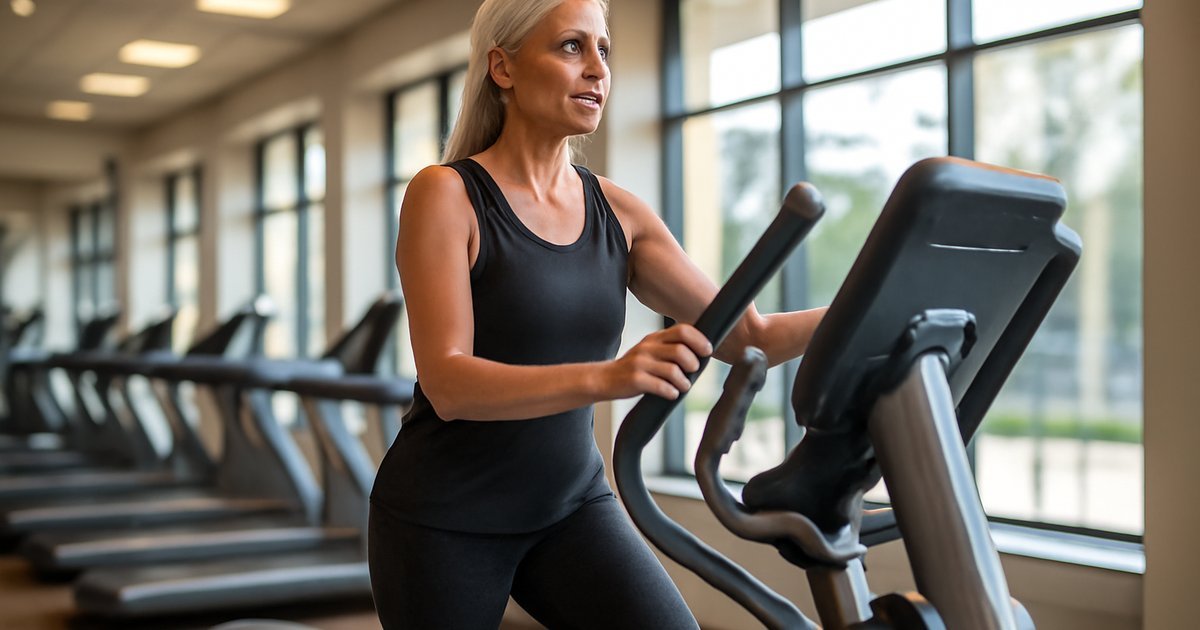
    An elliptical trainer — also called a cross-trainer or elliptical machine — is a stationary exercise device that simulates the motion of walking, running, and stair climbing simultaneously. Your feet move in a smooth, oval-shaped (elliptical) path, which is where the machine gets its name.

    Unlike a treadmill, your feet never leave the pedals. This eliminates the impact phase that occurs each time your foot strikes the ground during walking or running. That impact can be two to three times your body weight on a treadmill; on an elliptical, ground reaction forces drop by approximately 75%, according to research published in the Journal of Strength and Conditioning Research.

    Most ellipticals also include moving handlebars that allow you to push and pull with your arms, engaging the chest, back, shoulders, and biceps while your legs work simultaneously. The result is a full-body aerobic workout that can burn a substantial number of calories while protecting your joints.

    For adults over 50 — many of whom live with osteoarthritis, previous joint injuries, or decreased bone density — this combination of effectiveness and gentleness makes the elliptical an exceptionally practical tool.


    Health Benefits of Elliptical Training After 50

    The evidence supporting regular elliptical use for older adults spans multiple dimensions of health. Here’s what clinical research and major health organizations indicate:

    Cardiovascular Health

    The American Heart Association recommends at least 150 minutes of moderate-intensity aerobic activity per week for adults. The elliptical is an excellent way to accumulate those minutes. A 2022 study in the Journal of Aging and Physical Activity found that low-impact aerobic training significantly improved VO2 max — a key measure of cardiovascular fitness — in adults aged 55 to 70 after just 12 weeks.

    Improved cardiovascular fitness translates directly to lower risk of heart attack, stroke, and hypertension — the three leading causes of death in Americans over 65, according to CDC data.

    Joint Protection and Arthritis Management

    Osteoarthritis affects approximately 32.5 million adults in the United States, according to the CDC. For many of these individuals, high-impact exercise feels off-limits. The elliptical’s gliding motion keeps joints moving through a full range of motion without the compression forces that aggravate cartilage damage.

    Clinical evidence from Mayo Clinic indicates that movement — rather than rest — is typically the better approach for managing osteoarthritis pain. The elliptical offers a way to stay active while respecting your body’s limits.

    Weight Management and Metabolic Health

    After 50, metabolism slows and muscle mass naturally decreases — a process called sarcopenia. This makes weight management more challenging. A consistent elliptical routine helps counteract this by burning calories (typically 270 to 400 calories per 30-minute moderate session depending on body weight and intensity) and preserving lean muscle tissue when resistance levels are used appropriately.

    Balance and Coordination

    Using the elliptical with proper posture — standing upright, engaging your core, and minimizing your grip on the handles — trains your proprioception (your body’s sense of its own position). This can contribute to improved balance, which is critical for fall prevention in adults over 50.

    Mental Health and Cognitive Benefits

    The NIH’s National Institute on Aging notes that aerobic exercise is associated with reduced risk of depression, anxiety, and age-related cognitive decline. Even moderate-intensity sessions on the elliptical trigger the release of endorphins and support neuroplasticity — the brain’s ability to form and reorganize connections.


    Getting Started: Safety Tips Before Your First Session

    Before you step onto an elliptical for the first time — or return after a long break — there are important safety considerations to keep in mind.

    Get medical clearance first. If you have a history of heart disease, uncontrolled blood pressure, severe joint problems, or have been sedentary for an extended period, speak with your physician before starting any new exercise program. Most doctors welcome this conversation and can help you identify appropriate intensity targets.

    Start with stride length and resistance in mind. Many people begin with resistance levels that are too high or stride lengths that strain their hips. Start at the lowest resistance and a comfortable stride length, then build gradually over several weeks.

    Learn the machine before you push the pace. Spend your first one or two sessions simply getting comfortable with the motion, the posture, and how the controls work. Don’t worry about calories burned or distance in these early sessions.

    Use the heart rate monitor. Most ellipticals include grip-based heart rate sensors. For moderate-intensity exercise, aim to keep your heart rate between 50 and 70% of your maximum heart rate. A simple estimate of maximum heart rate is 220 minus your age — though this varies from person to person, and your doctor may provide a more personalized target.

    Wear proper footwear. Supportive athletic shoes with adequate cushioning and arch support make a meaningful difference in comfort and injury prevention. Avoid exercising in casual shoes or bare feet.


    Proper Elliptical Form for Adults Over 50

    Technique matters as much on an elliptical as on any other piece of equipment. Poor form can lead to hip strain, lower back pain, or inefficient workouts that don’t deliver results.

    • Stand tall: Keep your spine neutral, shoulders relaxed, and gaze forward. Avoid hunching over the handlebars.
    • Engage your core: Lightly contract your abdominal muscles throughout the session to protect your lower back and improve balance.
    • Push through your full foot: Avoid letting your heels rise or pressing exclusively with your toes. Distribute pressure evenly across the entire foot.
    • Don’t death-grip the handles: Hold them lightly enough that you could release them if needed. Over-gripping transfers work away from your legs and can strain your shoulders and wrists.
    • Push and pull with your arms: Actively drive the moving handlebars forward and back to engage your upper body and increase caloric burn.
    • Try pedaling in reverse: Reversing the pedal direction shifts emphasis to the hamstrings and glutes while adding variety to your routine.

    Progressive Elliptical Workout Routines for Adults Over 50

    The key to sustainable progress is gradual progression — increasing duration, resistance, or intensity no more than 10% per week. The following three-phase plan is designed to take you from beginner to confident elliptical user over 12 weeks.

    Phase 1: Foundation (Weeks 1–4)

    Goal: Build endurance and get comfortable with the machine.
    Frequency: 3 days per week
    Duration: 15–20 minutes per session
    Intensity: Low resistance (levels 1–3); conversational pace (you can speak in full sentences)

    Focus on consistency over intensity. If 15 minutes feels too easy by week 3, add 5 minutes — not more resistance.

    Phase 2: Building Aerobic Capacity (Weeks 5–8)

    Goal: Increase cardiovascular endurance and introduce interval variation.
    Frequency: 3–4 days per week
    Duration: 25–35 minutes per session
    Intensity: Alternate between 3 minutes at moderate resistance and 1 minute at slightly higher resistance

    This approach mirrors the benefits of interval walking for adults over 50 — using brief intensity spikes to challenge your cardiovascular system without overloading your joints.

    Phase 3: Strength and Stamina (Weeks 9–12)

    Goal: Build muscular endurance and improve overall fitness.
    Frequency: 4–5 days per week
    Duration: 35–45 minutes per session
    Intensity: Moderate to moderately high resistance; include 2 minutes of reverse pedaling every 10 minutes

    By this phase, many adults find they can tolerate longer sessions and begin to notice meaningful improvements in energy, mood, and ease of daily movement.

    Sample Weekly Schedule (Phase 2)

    • Monday: 30-minute moderate elliptical session
    • Tuesday: Rest or gentle stretching
    • Wednesday: 25-minute interval elliptical session
    • Thursday: Light strength training (bodyweight or resistance bands)
    • Friday: 30-minute elliptical session
    • Saturday: Outdoor walk or nature workout
    • Sunday: Rest

    Combining the Elliptical With Other Fitness Activities

    The elliptical works best as one component of a well-rounded fitness plan. Aerobic exercise alone won’t prevent sarcopenia or protect bone density — both of which are critical health concerns after 50.

    Clinical guidelines from the NIH recommend that adults over 50 also incorporate muscle-strengthening activities at least twice per week. This might mean adding dumbbell exercises, resistance band work, or bodyweight movements on your non-elliptical days.

    If you’re interested in pairing cardio with resistance training, our guide to home workouts for adults over 50 offers practical strength routines that complement elliptical cardio well.

    Flexibility and balance training — such as yoga, stretching, or tai chi — also pair effectively with elliptical work and help reduce injury risk during your cardio sessions.


    When to Call Your Doctor: Red Flags During Elliptical Exercise

    While the elliptical is one of the safest cardio machines available, no exercise is entirely risk-free. Know the warning signs that require you to stop immediately and seek medical attention.

    Stop and call 911 or go to the ER immediately if you experience:

    • Chest pain, tightness, or pressure during or after exercise
    • Severe shortness of breath that doesn’t resolve with rest
    • Sudden dizziness, fainting, or near-fainting
    • Heart palpitations (rapid, irregular, or pounding heartbeat)
    • Sudden numbness or weakness in your face, arm, or leg
    • Severe joint pain that begins or sharply worsens during exercise

    Contact your physician (non-emergency) if you notice:

    • Persistent joint pain that lasts more than 24 hours after exercise
    • Consistent shortness of breath at intensity levels that previously felt comfortable
    • Unusual fatigue that interferes with daily functioning
    • Swelling in your ankles or legs following workouts

    These symptoms may vary from person to person. When in doubt, err on the side of caution and consult your healthcare provider.


    Frequently Asked Questions About Elliptical Workouts After 50

    Is the elliptical safe if I have bad knees?

    For most people with knee osteoarthritis or previous knee injuries, the elliptical is considered one of the safest cardio options available. Research suggests it places significantly less compressive force on the knee joint compared to walking or running. That said, if you experience pain during or after elliptical use, consult your doctor or a physical therapist before continuing.

    How long should a beginner session last on the elliptical?

    If you’re new to exercise or returning after a long break, 10 to 15 minutes at low resistance is a perfectly appropriate starting point. Most physicians and trainers recommend building duration gradually — aiming for 30 minutes of moderate-intensity cardio per session as a long-term goal, consistent with AHA guidelines.

    Can the elliptical help with weight loss after 50?

    Clinical evidence indicates that consistent aerobic exercise, including elliptical training, contributes to caloric expenditure and supports weight management. However, research suggests that nutrition plays an equally important role. The elliptical is most effective for weight management when combined with a balanced, calorie-appropriate diet and other forms of physical activity.

    Should I use the moving handlebars or the stationary ones?

    Using the moving handlebars engages your upper body — chest, back, shoulders, and arms — and increases overall caloric burn. The stationary handles are useful when you want to focus on lower-body work or are working on balance by lightly touching rather than gripping. Most fitness professionals recommend alternating between the two within a session.

    How does the elliptical compare to the treadmill for adults over 50?

    Both are effective cardio options, but the elliptical is generally recommended for adults with joint pain, osteoarthritis, or a history of lower-extremity injuries. Treadmill workouts for adults over 50 offer the advantage of replicating natural walking gait and being weight-bearing — which benefits bone density. Your best choice depends on your individual health history and goals, and your doctor or physical therapist can help guide that decision.


    Conclusion: A Machine Built for This Stage of Life

    The elliptical machine isn’t just a fallback for people who can’t run. For adults over 50, it’s one of the most intelligently designed fitness tools available — offering cardiovascular challenge, full-body muscle engagement, and meaningful joint protection in a single piece of equipment.

    Whether you’re managing arthritis, recovering from an injury, or simply looking for a sustainable way to stay active through your 50s, 60s, and beyond, the elliptical gives you a pathway to consistent, meaningful fitness. Start slow, build progressively, listen to your body, and make your doctor a partner in the process.

    The research is clear: movement is medicine. And for many adults in the second half of life, the elliptical is one of the best prescriptions available.


    Medical Disclaimer: This article is for informational and educational purposes only. It does not constitute medical advice, diagnosis, or treatment. Always consult your physician or a qualified healthcare provider before making changes to your health routine or treatment plan.

    Medically reviewed by our editorial health team. Content follows evidence-based standards aligned with CDC and NIH guidelines.
  • Swimming for Fitness After 50: Benefits and How to Start

    Swimming for Fitness After 50: Benefits and How to Start

    Swimming may be the most complete low-impact exercise available — and for adults over 50, it could be exactly what your body needs.

    Linda, 63, had spent years dealing with knee pain that made walking on the treadmill feel like punishment. Her orthopedist suggested she try pool-based exercise, and within six weeks, she had lost eight pounds, her joint pain had eased significantly, and she was sleeping better than she had in years. “I wish I had started sooner,” she said. “It doesn’t even feel like working out.”

    Linda’s experience is far from unique. According to the CDC, only about 28% of Americans aged 50 and older meet the recommended guidelines for aerobic physical activity — and joint pain, injury history, and fear of overexertion are among the top reasons adults in this age group avoid exercise altogether.

    Swimming for fitness offers a powerful alternative. It delivers cardiovascular conditioning, full-body muscle engagement, improved flexibility, and mental health benefits — all while placing minimal stress on aging joints. In this guide, you’ll learn exactly why swimming works so well for adults over 50, what the clinical evidence says, and how to build a safe, effective routine even if you haven’t swum laps since high school.

    What Makes Swimming Different From Other Exercise?

    Swimming is a full-body, buoyancy-supported aerobic exercise that simultaneously trains your cardiovascular system, strengthens major muscle groups, and improves flexibility — all in a single session. Unlike running or even brisk walking, water reduces the effective weight load on your body by up to 90%, according to research published by the American Physical Therapy Association.

    This buoyancy effect means your knees, hips, lower back, and ankles are largely protected from the compressive forces that often make land-based exercise painful or risky for older adults. At the same time, water provides natural resistance in every direction you move — making every stroke, kick, and turn a strength-building event.

    The CDC identifies swimming as one of the healthiest forms of aerobic exercise for adults and notes it is especially beneficial for those with arthritis, osteoporosis, obesity, or recovering from musculoskeletal injuries.

    Beyond the physical, the rhythmic breathing patterns and sensory immersion of swimming have been associated with reduced cortisol levels and improved mood — benefits backed by multiple studies in sports medicine journals.

    Key Health Benefits of Swimming After 50

    Clinical evidence consistently supports swimming as a multi-system health intervention for older adults. Here is what the research suggests across major health domains:

    Cardiovascular Health

    A landmark study from the University of South Carolina, tracking more than 40,000 men over 32 years, found that swimmers had a 50% lower all-cause mortality rate compared to sedentary individuals — and fared better than runners and walkers in cardiovascular outcomes. The American Heart Association recommends at least 150 minutes per week of moderate-intensity aerobic activity, and swimming can serve as an excellent vehicle for reaching that goal.

    Muscle Strength and Tone

    Swimming engages the core, shoulders, back, glutes, hamstrings, and calves simultaneously. Research suggests regular swimming can slow the age-related loss of muscle mass known as sarcopenia, which affects an estimated 30% of adults over 60, according to the NIH. Strokes like freestyle, backstroke, and breaststroke each activate different muscle groups, allowing for balanced, full-body conditioning.

    Joint Health and Arthritis Relief

    The Arthritis Foundation reports that warm-water aquatic exercise is one of the most effective interventions for reducing joint pain and stiffness in people with osteoarthritis and rheumatoid arthritis. The gentle resistance of water supports joint mobility without the impact that can aggravate inflamed or damaged cartilage.

    Bone Health

    While swimming is not a weight-bearing exercise and therefore does not build bone density as directly as walking or resistance training, it does support muscle mass maintenance, which in turn plays a protective role in fall prevention. For adults already managing osteoporosis, this low-impact option is often safer and more sustainable than higher-intensity alternatives. Combining swimming with some weight-bearing activity — even light walking — is generally what most physicians recommend for comprehensive bone health.

    Mental Health and Cognitive Function

    Research published in the International Journal of Aquatic Research and Education suggests that regular swimming is associated with significant reductions in anxiety and depression symptoms among middle-aged and older adults. The meditative quality of repetitive stroke patterns, combined with the sensory experience of water, appears to activate the parasympathetic nervous system — your body’s “rest and restore” mode.

    Weight Management

    Depending on stroke type and intensity, a 30-minute swimming session can burn between 200 and 350 calories for an average adult. Over time, consistent swimming combined with a balanced diet supports healthy body composition — particularly important given that obesity affects more than 42% of U.S. adults, per CDC data.

    Risk Factors and Who Should Check With a Doctor First

    Swimming is widely considered safe for most adults over 50, but individual variation is important to acknowledge. Not everyone can or should enter a pool program without professional guidance.

    You should consult your physician before starting a swimming routine if you:

    • Have an active cardiovascular condition such as unstable angina, recent heart attack, or uncontrolled arrhythmia
    • Have open wounds, skin infections, or recent surgical incisions
    • Experience uncontrolled dizziness, balance disorders, or seizures
    • Have had a recent stroke or are in early cardiac rehabilitation
    • Have severe respiratory conditions such as uncontrolled asthma or advanced COPD
    • Are currently managing an acute musculoskeletal injury without physical therapy clearance

    For adults with well-managed chronic conditions — including hypertension, type 2 diabetes, or stable arthritis — swimming is frequently recommended by cardiologists, endocrinologists, and rheumatologists alike. Always loop in your healthcare provider before making significant changes to your exercise routine.

    How to Start Swimming for Fitness: A Step-by-Step Guide

    If it has been years since you swam regularly, starting slowly and strategically is key. Clinical evidence suggests that gradual progression is the most effective way to build endurance without increasing injury risk or causing burnout.

    Step 1: Choose the Right Facility

    Look for a pool that maintains water temperatures between 83°F and 88°F — the range recommended by the Arthritis Foundation for adults with joint conditions. Many YMCAs, community recreation centers, and senior fitness facilities offer lane swimming, water aerobics classes, and aquatic physical therapy in this range. Warm-water pools are especially helpful for adults dealing with muscle stiffness in the morning.

    Step 2: Start With Water Walking and Aqua Jogging

    If you are returning to the pool after a long break or learning lap swimming for the first time, begin in shallow water. Walking back and forth across the width of the pool, or performing gentle leg lifts and arm movements while holding the wall, builds aquatic confidence and light cardiovascular conditioning without technical demands. Many adults over 50 find that this phase alone — done three days a week for two to four weeks — produces measurable improvements in fitness and joint comfort.

    Step 3: Build Lap Swimming Gradually

    Once you feel comfortable in the water, begin lap swimming with short intervals. A reasonable beginner schedule might look like this:

    • Weeks 1-2: Swim 1-2 laps (25-50 meters), rest 60 seconds, repeat 4-6 times per session, 2-3 days per week
    • Weeks 3-4: Gradually increase to 3-4 laps per set, reduce rest to 45 seconds
    • Weeks 5-8: Work toward continuous swimming for 10-15 minutes, building to 20-30 minutes as endurance improves

    Most sports medicine physicians suggest following the “10% rule” — never increase your weekly swimming volume by more than 10% from one week to the next, to reduce overuse injury risk.

    Step 4: Learn or Refine Your Strokes

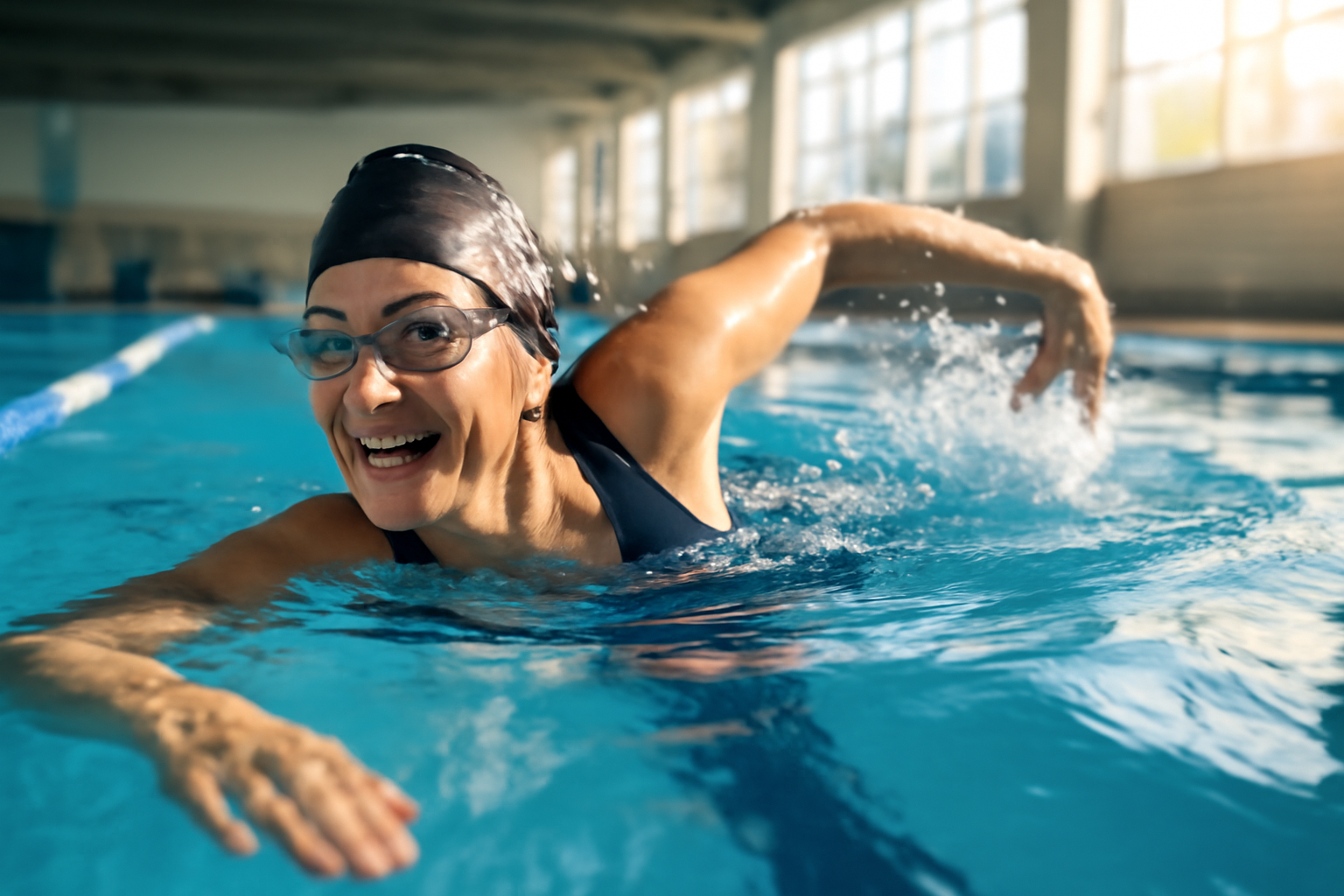
    Proper technique makes swimming both more effective and safer. For beginners, freestyle (front crawl) and backstroke are generally the most accessible and joint-friendly strokes. Breaststroke can place stress on the knee ligaments and inner ankle if performed incorrectly, so technique matters. Many pools offer adult swim lessons, and even experienced swimmers benefit from occasional coaching to correct form issues that can lead to shoulder impingement or neck strain over time.

    Step 5: Consider Water Aerobics Classes

    Group aquatic exercise classes — often called water aerobics or aqua fitness — provide structured cardiovascular and resistance training in a social, low-pressure environment. Research published in the Journal of Aging and Physical Activity found that older adults who participated in group water aerobics three times per week for 12 weeks showed significant improvements in balance, functional mobility, and self-reported quality of life. Many adults find the group dynamic more motivating than solo lap swimming, which is equally valid.

    For a complementary approach on land, consider pairing your swimming routine with gentle flexibility and mobility work. Our guide on Flexibility & Mobility Training for Adults 40+ offers practical stretching routines that pair well with aquatic exercise.

    Sample Weekly Swimming Schedule for Adults Over 50

    This schedule is designed for beginners to intermediate swimmers. Adjust based on your current fitness level and any guidance from your healthcare provider.

    • Monday: 20-minute swim session (freestyle and backstroke intervals) + 5-minute cool-down float
    • Wednesday: Water aerobics class (45-60 minutes) OR 25-minute moderate lap swim
    • Friday: 25-30 minute swim with mixed strokes + optional water walking cooldown
    • Saturday (optional): Gentle aqua stretching or beginner water yoga class

    Rest days are as important as active days. Swimming engages the same muscles repeatedly, and recovery time allows adaptation and growth. If you experience shoulder soreness or fatigue, reduce intensity and consider consulting a physical therapist about stroke mechanics.

    If you’re also looking for non-pool options on your off days, our article on Low-Impact Exercise After 50: Best Workouts for Joints covers excellent land-based alternatives that complement a swimming routine.

    When to Call Your Doctor or Seek Emergency Care

    Swimming is low-risk for most adults, but knowing when to stop and seek medical attention is essential.

    Stop swimming immediately and seek emergency care if you experience:

    • Chest pain, tightness, or pressure during or after swimming
    • Sudden shortness of breath beyond normal exercise exertion
    • Dizziness, fainting, or loss of balance in or near the water
    • Sudden, severe joint pain rather than gradual muscle fatigue
    • Heart palpitations that feel irregular or prolonged

    Schedule a non-emergency appointment with your doctor if you notice:

    • Persistent shoulder pain lasting more than a week despite rest
    • Ear pain, discharge, or hearing changes after pool swimming (may indicate swimmer’s ear, or otitis externa)
    • Skin rashes or irritation that does not resolve after showering
    • Chronic fatigue that does not improve after rest days
    • Worsening joint pain rather than gradual improvement

    The Cleveland Clinic advises all adults over 50 who begin a new exercise program to undergo a baseline physical examination, particularly if they have been sedentary for an extended period. This helps identify contraindications and allows your physician to tailor recommendations to your specific health history.

    Frequently Asked Questions

    How often should adults over 50 swim for health benefits?
    Most clinical guidelines, including those from the American Heart Association and the CDC, recommend at least 150 minutes of moderate-intensity aerobic activity per week. For swimming, this can be broken into five 30-minute sessions or three 50-minute sessions. Even two to three sessions per week of 20-30 minutes each have been shown to produce meaningful improvements in cardiovascular health and joint function over time.

    Is swimming good for people with arthritis?
    Yes — the Arthritis Foundation has long endorsed aquatic exercise as one of the most effective and comfortable forms of physical activity for people with osteoarthritis and rheumatoid arthritis. The buoyancy of water reduces joint loading, warm water can ease stiffness, and the gentle resistance supports muscle strength without aggravating inflammation. This varies from person to person, so consulting your rheumatologist before starting is advisable.

    Can swimming help with back pain?
    Research suggests that aquatic exercise, including swimming, can reduce chronic lower back pain and improve functional mobility in adults. Swimming strengthens the deep core muscles that support spinal alignment without the compressive loads that worsen many back conditions. However, some strokes — particularly breaststroke with an exaggerated head lift — can place strain on the cervical spine, so technique matters. See also our guide on Core Training After 40 for Back Pain Relief for complementary strengthening strategies.

    Do I need to know how to swim laps to benefit from pool exercise?
    Absolutely not. Water walking, aqua jogging, and water aerobics classes all deliver significant cardiovascular and muscular benefits without requiring lap swimming proficiency. Many adults over 50 achieve their fitness goals entirely through non-lap aquatic activities. The key is sustained movement in the water at a moderate intensity.

    Does swimming help with weight loss after 50?
    Swimming burns meaningful calories — estimates range from 200 to over 400 calories per 30-minute session depending on intensity and stroke — and supports the preservation of lean muscle mass, which naturally declines with age. Clinical evidence indicates that regular swimming combined with a nutritionally sound diet can contribute to gradual, sustainable weight management. It is not typically as effective as high-intensity land exercise for rapid weight loss, but it is far more sustainable for adults with joint limitations or chronic conditions.

    Conclusion

    Swimming for fitness after 50 is not just a gentle fallback — it is one of the most scientifically supported, clinically recommended, and body-friendly forms of exercise available to older adults. Whether your goal is to protect your heart, ease joint pain, manage your weight, build strength, or simply feel more energized and at ease, the pool offers a uniquely effective environment to get there.

    Start where you are. Even two sessions per week in the water can produce measurable changes in how you feel, move, and function within weeks. Talk to your doctor about your specific health history, find a pool that fits your schedule and budget, and give yourself permission to progress gradually.

    The water is waiting — and it may be one of the best investments you can make in your long-term health.


    Medical Disclaimer: This article is for informational and educational purposes only. It does not constitute medical advice, diagnosis, or treatment. Always consult your physician or a qualified healthcare provider before making changes to your health routine or treatment plan.

    Medically reviewed by our editorial health team. Content follows evidence-based standards aligned with CDC and NIH guidelines.