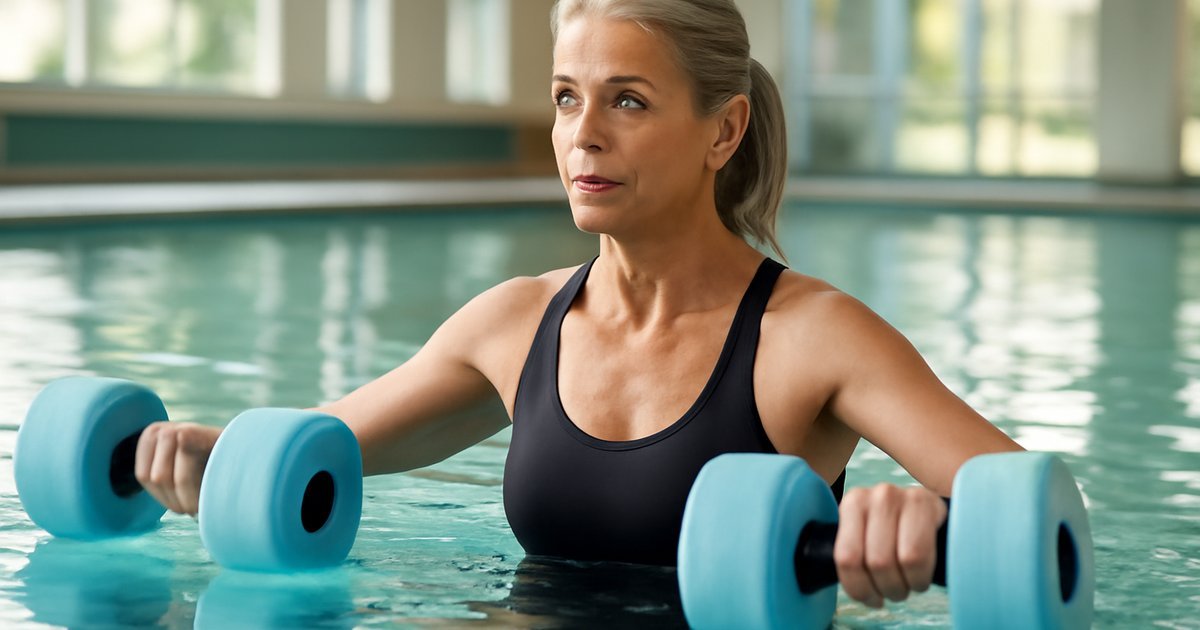
Pool-based resistance exercise may be one of the most underrated tools for preserving muscle, protecting joints, and boosting cardiovascular health in adults over 50.
Margaret, 63, had spent years avoiding the gym after a knee replacement left her nervous about impact and injury. Her orthopedist mentioned aquatic strength training almost in passing — and it changed everything. Within four months, she was lifting more, moving with less pain, and sleeping better than she had in years.
Her story is far from unique. According to the CDC, adults over 50 are at significant risk for age-related muscle loss — a condition called sarcopenia — which can lead to falls, fractures, and a sharp decline in independence. Yet many adults in this age group avoid traditional weight training out of fear of joint strain or injury.
Aquatic strength training offers a compelling middle ground. By harnessing water’s natural resistance and buoyancy, it allows you to build real muscle and improve functional fitness without the punishing impact of land-based exercise. In this guide, you’ll learn exactly how it works, what the science says, and how to build a safe, effective routine — whether you’re a seasoned swimmer or a complete beginner.
What Is Aquatic Strength Training?
Aquatic strength training — also called water resistance training or pool strength exercise — refers to structured exercise performed in a pool that uses water’s physical properties to create muscular resistance. Unlike swimming laps, which primarily develops cardiovascular endurance, aquatic strength training targets specific muscle groups through deliberate movement against water resistance.
Water is approximately 800 times denser than air. That density creates multidirectional resistance — meaning every push, pull, and press you make in the water is met with opposing force. This forces your muscles to work harder during both the active and return phases of each movement, which is a key advantage over many gym machines.
According to the NIH National Institute on Aging, muscle mass naturally decreases by 3 to 5 percent per decade after age 30, with losses accelerating after 60. Aquatic strength training directly addresses this decline by stimulating the muscle fibers responsible for strength and functional movement — the same fibers most affected by sarcopenia.
It’s widely used in clinical rehabilitation settings at institutions like the Cleveland Clinic and Mayo Clinic, and it’s appropriate for a broad range of fitness levels, including adults managing arthritis, osteoporosis, obesity, chronic pain, and post-surgical recovery.
Signs You Might Benefit from Aquatic Strength Training
Not everyone needs to move their workout into the pool — but certain patterns suggest it could be especially valuable for you. Look for these common indicators:
Early signs that land-based exercise may be causing problems:
- Joint pain during or after weight training sessions
- Swelling in knees, ankles, or hips after walking or jogging
- Muscle soreness that takes more than 48 to 72 hours to resolve
- Reluctance to exercise due to fear of falling or injury
- Lower back pain aggravated by standing or lifting
Signs of muscle loss or functional decline that aquatic training can help address:
- Difficulty rising from a chair without using your arms
- Reduced grip strength or trouble carrying groceries
- Balance issues or a recent fall history
- Gradual reduction in overall physical activity
- Fatigue from activities that used to feel easy
A 2020 meta-analysis published in the Journal of Aging and Physical Activity found that water-based exercise significantly improved muscle strength, balance, and functional mobility in adults over 60 compared to no-exercise control groups — with a safety profile notably superior to land-based alternatives.
Causes of Muscle Loss After 50 — and Why Water Helps
Understanding why muscle loss happens helps explain why aquatic training is such an effective countermeasure.
Biological causes:
- Declining levels of anabolic hormones including testosterone, estrogen, and growth hormone
- Reduced motor neuron activity, which diminishes the brain’s ability to recruit fast-twitch muscle fibers
- Chronic low-grade inflammation that breaks down muscle tissue over time
- Impaired protein synthesis, meaning muscles rebuild more slowly after use
Lifestyle and environmental factors:
- Sedentary behavior — the CDC reports that only 28 percent of US adults aged 50 to 64 meet physical activity guidelines
- Inadequate dietary protein intake, especially common in older adults living alone
- Pain avoidance behaviors that lead to reduced movement overall
- Comorbid conditions like type 2 diabetes, cardiovascular disease, and chronic pain that limit mobility
Water’s unique properties address several of these barriers simultaneously. Buoyancy reduces effective body weight by up to 90 percent when submerged to the neck, dramatically decreasing joint load. Hydrostatic pressure — the gentle compression water exerts on submerged limbs — improves circulation and may reduce post-exercise inflammation. And water’s thermal properties help regulate core temperature, making exercise more comfortable for people who overheat easily.
Together, these factors allow you to train harder, more frequently, and with less discomfort — which is exactly what aging muscles need to respond and grow stronger. For those also exploring home workouts for adults over 50, aquatic training can serve as a powerful complement to dry-land routines.
Diagnosis and Assessment: Are You Ready to Start?
Before entering the pool, a brief clinical assessment can help you start safely and get the most out of your training.
What your doctor will evaluate:
- Cardiovascular status — particularly if you have a history of heart disease, arrhythmia, or uncontrolled hypertension
- Skin integrity — open wounds, ulcers, or active infections are temporary contraindications
- Ear health — recurrent ear infections may be aggravated by repeated water exposure
- Joint stability — particularly if you’ve had recent surgery or significant osteoporosis
Self-assessment checklist before you begin:
- Can you comfortably stand in chest-deep water without balance concerns?
- Are you cleared for moderate physical activity by your physician?
- Do you have access to a supervised pool or aquatic fitness class?
- Can you manage water entry and exit safely (using handrails or steps)?
Most adults over 50 are excellent candidates for aquatic strength training. The American College of Sports Medicine recommends that adults with chronic conditions obtain medical clearance before beginning any new resistance training program — and water-based programs are generally easier to clear than land-based alternatives due to their low-impact nature.
If you’re also managing joint issues, you might find our guide on foam rolling after 40 for recovery and mobility a useful complement to your aquatic routine.
Treatment Options: How to Structure Aquatic Strength Training
Aquatic strength training is not one-size-fits-all. Clinical evidence supports several formats, each with distinct benefits depending on your goals and fitness level.
1. Water Resistance Exercises (No Equipment)
These use the water itself as resistance. Examples include water walking, leg presses against pool walls, arm sweeps, and standing calf raises. Research suggests this approach is ideal for beginners and for individuals with significant joint limitations. A 12-week study from Johns Hopkins found that pool walking three times per week produced meaningful improvements in lower-body strength in adults averaging 66 years old.
2. Aquatic Dumbbells and Resistance Cuffs
Foam or hollow-core aquatic dumbbells create resistance when pushed through water in any direction. Ankle and wrist cuffs add drag to limb movements. These tools allow progressive overload — the gradual increase in resistance necessary for continued muscle development — and are widely available at aquatic supply stores and through physical therapy clinics.
3. Water Treadmills and Underwater Bikes
Hydrotherapy clinics and medical fitness centers often feature underwater treadmills and stationary bikes. These allow full cardiovascular conditioning alongside strength work. Clinical evidence from the American Physical Therapy Association supports their use in post-surgical rehabilitation and chronic pain management.
4. Supervised Aquatic Fitness Classes
Group aquatic exercise classes led by certified instructors provide structured programming, social accountability, and real-time form correction. The Arthritis Foundation offers evidence-based aquatic programs specifically designed for adults with joint conditions. Research published in the Archives of Physical Medicine and Rehabilitation found that participants in structured group aquatic programs showed significantly greater improvements in strength and quality of life compared to self-directed exercisers.
Sample Beginner Pool Strength Routine (3 days/week):
- Water walking: 5 minutes forward and backward (warm-up)
- Standing leg lifts (front, side, back): 3 sets of 12 each leg
- Arm sweeps with aquatic dumbbells: 3 sets of 15
- Standing squats in chest-deep water: 3 sets of 10
- Calf raises against pool wall: 3 sets of 15
- Seated flutter kicks (using pool edge for support): 3 sets of 20 seconds
- Slow water walking: 5 minutes (cool-down)
Allow 48 hours of recovery between sessions to allow muscle repair. This varies from person to person — some adults over 60 may need 72 hours initially.
Living With a Stronger Body: Day-to-Day Management and Prevention
Building strength in the pool pays dividends far beyond the water. Clinical evidence consistently links improved muscle mass and functional fitness in older adults with reduced fall risk, better metabolic health, and greater psychological resilience.
The CDC reports that falls are the leading cause of injury-related death among adults over 65, with medical costs exceeding $50 billion annually. Aquatic strength training directly targets the muscle groups — particularly hip abductors, quadriceps, and core stabilizers — most responsible for fall prevention.
Practical strategies to maximize results:
- Pair with adequate protein: Most physicians recommend 1.2 to 1.6 grams of protein per kilogram of body weight daily for older adults engaged in resistance training. Consult your doctor or a registered dietitian for personalized guidance.
- Track your progress: Use a simple notebook to log sets, reps, and perceived effort. Research suggests that self-monitoring significantly improves long-term adherence.
- Add balance work on dry land: Combining aquatic training with standing balance exercises amplifies fall-prevention benefits. Even 10 minutes of daily balance practice — such as single-leg standing while holding a counter — has documented benefits.
- Stay consistent over intensity: Three moderate sessions per week, sustained over months, produce far greater adaptations than sporadic intense workouts.
- Hydrate before, during, and after: The cool water environment can mask dehydration. Adults over 50 are particularly susceptible because the sensation of thirst diminishes with age.
If you enjoy combining different movement formats, our guide on elliptical workouts after 50 offers another low-impact cardio option that pairs well with a pool-based strength program.
When to Call Your Doctor — and Red Flag Symptoms
Aquatic strength training is among the safest forms of exercise available to older adults — but no form of physical activity is entirely without risk. Knowing when to pause and seek guidance is essential.
Stop exercising immediately and seek emergency care if you experience:
- Chest pain, pressure, or tightness during or after exercise
- Sudden shortness of breath disproportionate to your effort level
- Heart palpitations or irregular heartbeat
- Sudden dizziness, confusion, or loss of coordination
- Numbness or weakness in one side of the body
Schedule a physician visit within a few days if you notice:
- Joint swelling or pain that worsens with exercise and does not resolve within 48 hours
- Skin irritation, rash, or ear discomfort following pool sessions
- Persistent muscle weakness despite consistent training over 6 to 8 weeks
- Unusual fatigue that interferes with daily activity
What to tell your doctor at your next visit:
Bring a brief log of your sessions including frequency, duration, and any symptoms you noticed. Ask specifically whether your current medications — particularly diuretics, beta-blockers, or blood pressure medications — may affect your exercise response or hydration needs in an aquatic setting.
Frequently Asked Questions
Q: Can aquatic strength training actually build muscle, or is it only good for rehabilitation?
A: Clinical evidence confirms that water-based resistance training builds measurable muscle mass and improves strength — not just in rehabilitation patients, but in healthy older adults seeking general fitness. A 2019 systematic review in the Journal of Strength and Conditioning Research found significant hypertrophy (muscle growth) outcomes in adults over 55 who performed structured aquatic resistance programs for 12 weeks or more. The key is progressive overload — gradually increasing resistance or volume over time.
Q: Do I need to know how to swim to do aquatic strength training?
A: No. The vast majority of aquatic strength exercises are performed in standing-depth water — typically between waist and chest depth — where your feet remain on the pool floor. Swimming ability is not required. That said, basic water comfort and comfort with entry and exit are important for safety.
Q: How does aquatic training compare to land-based strength training for adults over 50?
A: Research suggests both produce meaningful strength gains, but aquatic training offers a superior safety profile for individuals with joint conditions, balance issues, or post-surgical limitations. Land-based training may produce slightly faster strength gains in healthy adults without joint limitations, but aquatic training allows for greater training frequency and volume with less soreness and injury risk — factors that significantly impact long-term results.
Q: How often should I do aquatic strength training to see results?
A: Most clinical evidence supports two to three sessions per week, with at least 48 hours of rest between sessions. The American College of Sports Medicine recommends that older adults perform resistance training on non-consecutive days. Consistency over several months produces the most significant improvements in muscle mass, balance, and functional strength.
Q: Are there any medications that might affect my ability to exercise in water?
A: Yes — and this is an important conversation to have with your physician. Certain medications, including diuretics (water pills), blood pressure medications, and medications that affect body temperature regulation, can influence your safety during aquatic exercise. Always disclose your full medication list before starting a new exercise program.
Conclusion
Aquatic strength training is one of the most evidence-backed, accessible, and joint-friendly paths to building muscle and maintaining functional independence after 50. Whether you’re managing arthritis, recovering from surgery, or simply looking for a smarter way to stay strong, the pool offers a uniquely supportive environment for serious fitness work.
The research is clear: regular water resistance training builds real muscle, improves balance, reduces fall risk, and enhances quality of life in older adults. It’s not a shortcut or a compromise — it’s a clinically validated approach that deserves a permanent place in your health routine.
Start with two sessions per week, focus on form over intensity, and be patient with your progress. Talk with your physician before beginning, and consider connecting with a certified aquatic fitness instructor who specializes in working with adults over 50. Your strongest years may still be ahead of you.
This article is for informational and educational purposes only. It does not constitute medical advice, diagnosis, or treatment. Always consult your physician or a qualified healthcare provider before making changes to your health routine or treatment plan.
Medically reviewed by our editorial health team. Content follows evidence-based standards aligned with CDC and NIH guidelines.