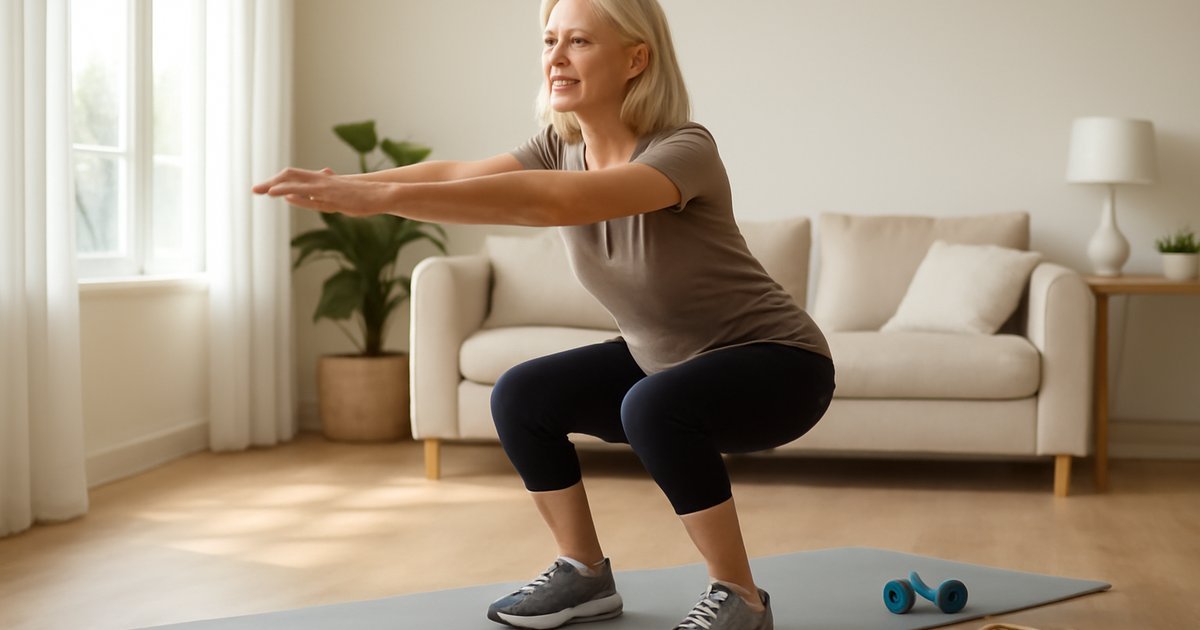
You don’t need a gym membership, expensive equipment, or an hour a day to stay strong, mobile, and healthy after 50 — you just need the right plan.
Introduction
Margaret, 62, had always been active — until her gym closed during a particularly hectic year and she never quite found her way back. Within eight months, she noticed more stiffness in her knees, lower energy by midday, and a creeping frustration that staying fit required more logistics than she had time for.
She’s far from alone. According to the CDC, fewer than 25% of American adults aged 50 and older meet the recommended guidelines for both aerobic and muscle-strengthening activity. Yet research consistently shows that regular physical activity after 50 is one of the most powerful tools available for preventing chronic disease, maintaining independence, and improving quality of life.
The good news? You don’t need a gym to get there. Home workouts for adults over 50 — when designed thoughtfully — can deliver real, measurable results. In this guide, you’ll learn what types of exercise matter most at this stage of life, how to build a safe and effective home routine, what the science says about training at home, and how to stay consistent without burning out.
Why Exercise at Home Makes Sense After 50
Home-based fitness isn’t a compromise — for many adults over 50, it’s actually the smarter choice. Convenience removes one of the biggest barriers to consistency: transportation, gym hours, crowded equipment, and locker room logistics simply disappear when your workout space is twenty steps from your kitchen.
Clinical evidence strongly supports home-based exercise programs for older adults. A 2021 study published in the Journal of Aging and Physical Activity found that home-based resistance training programs produced comparable strength gains to supervised gym training in adults aged 55 to 75, with significantly higher long-term adherence rates.
Beyond convenience, home workouts offer something underrated: safety on your terms. You can control the floor surface, eliminate fall hazards, and modify movements without self-consciousness. This matters more than many people realize — fear of falling or looking uncoordinated leads many older adults to avoid exercise altogether, which only increases their risk over time.
Research from the NIH’s National Institute on Aging confirms that physical inactivity accelerates muscle loss (sarcopenia), bone density decline, and metabolic slowdown after age 50 — all of which a well-structured home program can meaningfully slow or partially reverse.
The Four Pillars of Fitness After 50
Effective home workouts for adults over 50 shouldn’t focus on just one type of exercise. Clinical guidelines from the American College of Sports Medicine (ACSM) and the CDC recommend that older adults target four key fitness components:
- Aerobic endurance — for heart health, energy, and metabolic function
- Muscle strength — to counter sarcopenia and support joints
- Flexibility and mobility — to maintain range of motion and reduce injury risk
- Balance and coordination — to prevent falls, the leading cause of injury-related death in adults over 65
A well-rounded weekly routine addresses all four. The good news is that most can be done at home with little or no equipment, using your own body weight, a sturdy chair, a resistance band, or a light pair of dumbbells.
According to the CDC, falls result in more than 36,000 deaths among older adults annually in the United States. Balance training — something you can practice at home in ten minutes a day — has been clinically shown to reduce fall risk by up to 23% in community-dwelling older adults, per a Cochrane systematic review.
Cardio at Home: Heart-Healthy Options That Protect Your Joints
You don’t need a treadmill or a spin bike to get your heart rate up. Many adults over 50 avoid high-impact cardio due to joint pain or prior injuries — and that’s a reasonable concern. The key is choosing aerobic activities that challenge your cardiovascular system without punishing your knees, hips, or lower back.
Effective low-impact cardio options for home include:
- Marching in place — a deceptively effective warm-up and cardio option
- Step touches and side steps — gentle on joints, great for coordination
- Seated cardio — arm circles, seated leg lifts, and punching movements done from a sturdy chair
- Stair climbing — if you have stairs at home, a structured stair routine counts as real cardio
- Dance-style movement — rhythmic movement to music improves cardiovascular health and mood simultaneously
The American Heart Association recommends at least 150 minutes per week of moderate-intensity aerobic activity for adults. That breaks down to just 30 minutes, five days a week — entirely achievable without leaving your home.
If you’re already comfortable with basic indoor cardio and want to add outdoor movement, our guide on Interval Walking After 50 shows how to use simple walk-pace changes to boost cardiovascular fitness safely.
Strength Training at Home: Building Muscle Without a Gym
Muscle loss is not inevitable after 50 — but it does require intentional effort to prevent. Adults who don’t engage in regular resistance training can lose up to 3-5% of muscle mass per decade after age 30, with the rate accelerating after 60, according to the NIH.
The most effective home strength training tools for adults over 50 include:
- Bodyweight exercises — squats, wall push-ups, glute bridges, and step-ups build real strength with zero equipment
- Resistance bands — lightweight, inexpensive, and joint-friendly; excellent for rows, shoulder presses, and leg work
- Light to moderate dumbbells — a single pair of 5- to 15-pound dumbbells covers most movements
- Household items — water jugs, canned goods, and a sturdy chair can substitute when equipment isn’t available
Clinical evidence indicates that two to three strength sessions per week — even as short as 20 to 30 minutes — are sufficient to produce meaningful improvements in muscle strength, functional mobility, and metabolic health in adults over 50.
Focus on compound movements that engage multiple muscle groups simultaneously: squats, hinges (like Romanian deadlifts with a band), pushing (modified push-ups), and pulling (seated rows with a band). These movements translate directly to everyday tasks like carrying groceries, rising from a chair, and climbing stairs.
For a deeper look at bodyweight-focused approaches, our article on Bodyweight Training After 40 provides a structured progression that works well for home environments.
Flexibility, Mobility, and Balance: The Exercises Most People Skip
Strength and cardio get most of the attention — but flexibility, mobility, and balance training may deliver the most meaningful quality-of-life improvements for adults over 50.
Mobility (your active range of motion through a joint) declines gradually with age and inactivity. When hips, thoracic spine, and ankles become restricted, compensations occur — and those compensations often lead to pain in the knees, lower back, and shoulders.
Effective home mobility exercises include:
- Hip flexor stretches — especially important for those who sit for long periods
- Cat-cow movements — gentle spinal mobility that reduces morning stiffness
- Thoracic rotations — improve upper back and shoulder range of motion
- Ankle circles — often overlooked but critical for stability and fall prevention
Balance training is equally critical. Simple home practices like single-leg stands (holding a countertop at first), heel-to-toe walking, and tandem stance can meaningfully improve stability. Research published in the British Journal of Sports Medicine found that multicomponent exercise programs incorporating balance training reduced fall incidence in older adults by up to 34%.
Our companion guide on Stretching and Recovery After 40 covers targeted flexibility protocols that pair perfectly with a home strength routine.
A Sample Weekly Home Workout Plan for Adults Over 50
Consistency matters more than intensity. A realistic, repeatable weekly structure helps your body adapt and your habits stick. Here’s a sample template you can adjust based on your current fitness level:
Monday — Strength (Lower Body Focus)
Wall squats, glute bridges, resistance band leg press, calf raises, hip flexor stretch — 25 to 30 minutes
Tuesday — Cardio + Balance
Marching in place, step touches, stair climbing or hallway walks, single-leg stands, heel-to-toe walking — 30 minutes
Wednesday — Active Recovery
Gentle stretching, cat-cow, thoracic rotations, deep breathing — 15 to 20 minutes
Thursday — Strength (Upper Body Focus)
Wall push-ups, resistance band rows, overhead press with light dumbbells or band, bicep curls, shoulder mobility work — 25 to 30 minutes
Friday — Cardio
Dance-style movement, seated cardio, marching, or a brisk indoor walk — 30 minutes
Saturday — Full Body + Core
Bodyweight squats, modified push-ups, band rows, dead bugs (core), bird dogs, plank holds (on knees if needed) — 30 minutes
Sunday — Rest or Gentle Movement
Walk around the block, gentle yoga, or complete rest depending on how you feel
This framework totals roughly 150 minutes of moderate activity per week — exactly in line with federal physical activity guidelines. Adjust the intensity, duration, and rest days based on your individual needs and how your body responds.
Safety First: Important Guidelines Before You Start
Starting or resuming exercise after 50 is overwhelmingly beneficial — but doing it safely protects you from setbacks that could derail your progress. Keep these principles in mind:
- Get medical clearance first if you have cardiovascular disease, uncontrolled hypertension, recent surgery, or any condition that limits physical activity. The ACSM’s pre-exercise screening guidelines recommend consulting your physician before beginning a new moderate-to-vigorous exercise program if you have known chronic conditions.
- Start at 50 to 60% of what you think you can do — soreness that lasts more than 48 hours is a sign you did too much too soon.
- Prioritize form over load — moving incorrectly with heavy resistance causes injury faster than any other mistake.
- Use stable surfaces and supportive footwear — exercising barefoot on hardwood floors increases fall risk; wear supportive athletic shoes even at home.
- Stay hydrated — thirst sensation diminishes with age; drink water before, during, and after exercise even if you don’t feel thirsty.
- Listen to pain signals — muscle fatigue and mild soreness are normal; sharp, joint-specific, or chest-related pain are not. Stop and seek medical attention if you experience chest pain, dizziness, shortness of breath disproportionate to effort, or sudden joint pain.
When to Call Your Doctor: Red Flags and Check-In Points
Most healthy adults over 50 can begin a moderate home exercise program safely. However, certain signs warrant medical evaluation before continuing or escalating your routine.
Seek immediate emergency care if you experience:
- Chest pain, pressure, or tightness during or after exercise
- Sudden severe shortness of breath that doesn’t resolve with rest
- Fainting or near-fainting (syncope)
- Sudden severe headache or vision changes during exertion
- Rapid or highly irregular heartbeat that does not return to normal within a few minutes of stopping
Schedule a non-emergency appointment if you notice:
- Joint swelling or persistent sharp pain in a specific area lasting more than 72 hours
- Unusual fatigue that worsens with activity rather than improving over weeks
- Dizziness or lightheadedness consistently triggered by exercise
- Any new symptom you can’t explain
At your next routine visit, consider discussing your home exercise plan with your doctor. Most physicians are enthusiastic supporters of patient-initiated fitness habits — and your doctor may be able to refer you to a physical therapist or certified exercise physiologist for personalized guidance, particularly if you’re managing a chronic condition.
Frequently Asked Questions
How often should adults over 50 work out at home?
Most clinical guidelines recommend at least five days of moderate activity per week, including two to three days of strength training. This doesn’t mean every session needs to be intense — gentle movement, stretching, and balance work on lighter days all contribute to your weekly total. Consistency over weeks and months matters far more than any single session.
Can I build real muscle at home without weights?
Yes — research suggests that bodyweight training can be highly effective for building and preserving muscle in adults over 50, particularly when applied progressively (gradually making movements more challenging). Exercises like squats, push-up variations, glute bridges, and resistance band movements provide sufficient mechanical load to stimulate muscle protein synthesis when performed with proper form and appropriate effort.
Is it safe to exercise at home if I have arthritis?
For most people with osteoarthritis or rheumatoid arthritis, low-impact exercise is not only safe but clinically recommended. The American College of Rheumatology endorses regular physical activity as a cornerstone of arthritis management. However, this varies from person to person — always consult your rheumatologist or primary care physician before starting a new exercise program if you have active joint inflammation or significant mobility limitations.
What if I haven’t exercised in years?
Start with shorter sessions — even 10 to 15 minutes — and build gradually. Research published in JAMA Internal Medicine found that even modest increases in physical activity among previously sedentary older adults produced significant improvements in cardiovascular and metabolic health markers within 12 weeks. There is no starting point too low. The goal is simply to begin moving more than you did yesterday.
Do I need any equipment for home workouts after 50?
No equipment is required to start. A sturdy chair, a clear floor space, and your own body weight are sufficient for a complete and effective workout. As you progress, a resistance band (approximately $10-$20) and a light pair of dumbbells are the two most cost-effective additions for expanding your home routine. Many adults over 50 find these two tools alone provide everything they need for years of consistent training.
Conclusion
Staying active after 50 doesn’t require a gym, a complicated schedule, or a significant investment. It requires a plan that fits your body, your life, and your goals — and the consistency to show up for it most days of the week.
The clinical evidence is clear: regular exercise after 50 reduces the risk of heart disease, type 2 diabetes, cognitive decline, osteoporosis, and falls. It improves sleep, mood, and energy. It helps you stay independent longer.
You have more control over how you age than most people realize. A home workout routine — built around the four pillars of cardio, strength, flexibility, and balance — is one of the highest-return investments you can make in your long-term health. Start where you are. Progress at your own pace. And always loop in your healthcare provider as a partner in the process.
Medical Disclaimer: This article is for informational and educational purposes only. It does not constitute medical advice, diagnosis, or treatment. Always consult your physician or a qualified healthcare provider before making changes to your health routine or treatment plan.
Medically reviewed by our editorial health team. Content follows evidence-based standards aligned with CDC and NIH guidelines.