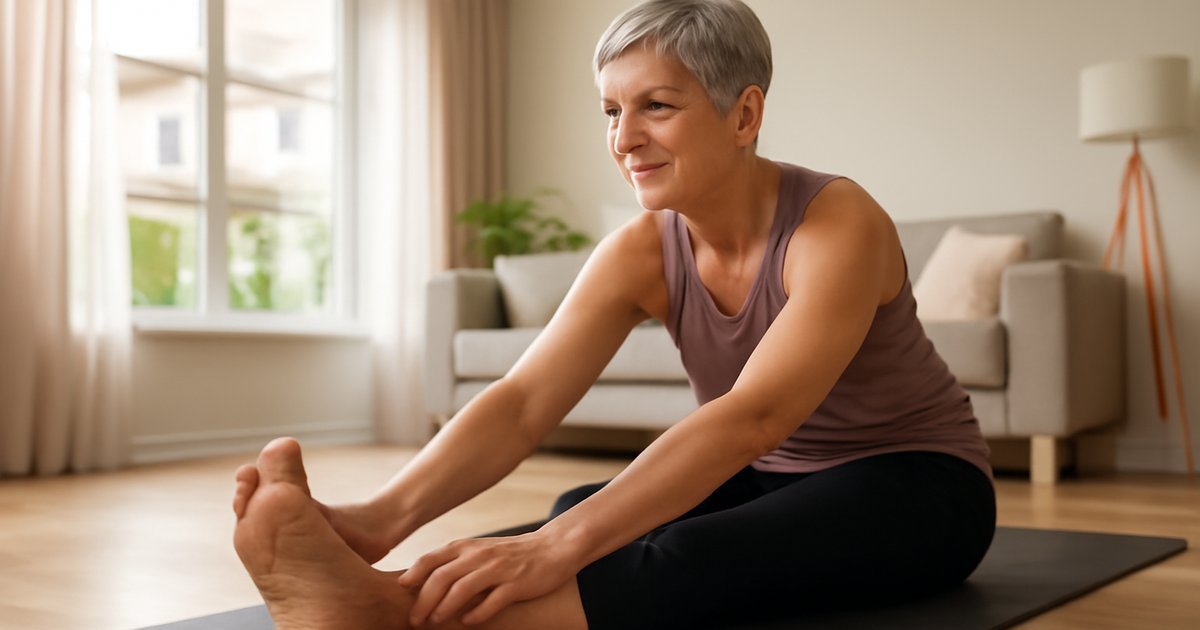
Stiffness isn’t inevitable — the right flexibility training can restore your range of motion, reduce pain, and help you move freely well into your 60s and 70s.
Introduction
Margaret, 62, used to joke that getting out of bed in the morning felt like "unfolding a lawn chair." Her hips ached, her shoulders were tight, and bending down to tie her shoes had become a genuine challenge. Her doctor suggested she start a simple flexibility routine — and within eight weeks, she noticed a dramatic difference in how she moved through her day.
Margaret’s story isn’t unusual. According to the National Institutes of Health (NIH), adults begin losing measurable joint flexibility as early as their 30s, with the rate of decline accelerating significantly after age 50. Yet flexibility training remains one of the most underutilized tools in adult fitness — often overshadowed by strength work or cardio.
In this guide, you’ll learn what flexibility training actually is, why it becomes so critical after 50, how to start safely, and what clinical evidence says about its real health benefits. Whether you’re managing joint pain, recovering from an injury, or simply trying to stay active and independent, this article will give you a practical, evidence-based roadmap.
What Is Flexibility Training?
Flexibility training refers to any structured practice designed to improve the range of motion (ROM) of your joints and the extensibility of your muscles and connective tissues. Put simply, it’s about helping your body move more freely and with less resistance.
There are three main types of flexibility training most commonly recommended for adults over 50:
- Static stretching: Holding a stretch position for 15–60 seconds without movement. This is the most widely practiced form and has strong safety credentials for older adults.
- Dynamic stretching: Controlled, active movements that take joints through their full range of motion — such as leg swings or arm circles. Often used as a warm-up.
- Proprioceptive Neuromuscular Facilitation (PNF): A more advanced technique involving alternating contraction and relaxation of muscles to achieve deeper stretches. Often performed with a partner or physical therapist.
According to the American College of Sports Medicine (ACSM), flexibility exercises should be performed at least two to three days per week for all healthy adults — and that recommendation becomes even more important as you age.
The CDC notes that regular physical activity, including flexibility work, is associated with a reduced risk of functional decline, falls, and chronic disease complications in adults over 50. Flexibility isn’t a luxury — it’s a health essential.
Signs Your Flexibility Needs Attention
Many adults don’t realize how much mobility they’ve lost until a daily task becomes difficult or painful. Here’s what reduced flexibility typically looks like — at both early and more advanced stages.
Early signs of declining flexibility:
- Stiffness after sitting or lying down for more than 20–30 minutes
- Difficulty reaching overhead without shoulder discomfort
- Tightness in the hips when climbing stairs or getting out of a car
- Lower back tension after walking or standing for moderate periods
- Reduced stride length when walking
Advanced signs that warrant medical evaluation:
- Joint pain that persists beyond 48 hours after stretching
- Significant asymmetry in movement between left and right sides
- Loss of balance during basic stretching movements
- Numbness or tingling during or after stretching
- Inability to perform routine tasks like dressing or bathing without assistance
A 2021 study published in the Journal of Aging and Physical Activity found that adults over 60 with self-reported stiffness were significantly more likely to experience a fall within the following 12 months — reinforcing why addressing flexibility early matters so much.
Why Flexibility Declines After 50 — Causes and Risk Factors
Flexibility loss after 50 isn’t simply about "getting old." Several biological, lifestyle, and medical factors drive it — and many of them are modifiable.
Biological causes:
- Collagen changes: The connective tissue in tendons, ligaments, and joint capsules becomes stiffer and less elastic as collagen fibers cross-link with age.
- Reduced synovial fluid: Joints produce less lubricating fluid, increasing friction and limiting smooth movement.
- Muscle fiber changes: The proportion of slow-twitch muscle fibers shifts, and overall muscle mass declines — a process called sarcopenia — reducing the elastic component of muscle tissue.
- Hormonal shifts: Declining estrogen in postmenopausal women has been associated with increased joint stiffness and connective tissue changes.
Lifestyle risk factors:
- Sedentary behavior — sitting for more than 8–10 hours per day
- Inadequate hydration, which affects tissue elasticity
- Chronic stress, which increases muscle tension and cortisol levels
- Poor sleep, which limits tissue repair and recovery
Medical conditions that compound flexibility loss:
- Osteoarthritis — affects an estimated 32.5 million US adults, per the CDC
- Type 2 diabetes — elevated blood glucose contributes to connective tissue glycation (stiffening)
- Hypothyroidism — associated with muscle stiffness and cramps
- Parkinson’s disease — causes rigidity that significantly limits range of motion
Understanding your personal risk factors helps you and your physician design a flexibility program that’s both safe and effective for your situation.
How Flexibility Training Is Assessed and Prescribed
Before jumping into a stretching routine, it’s worth understanding how healthcare providers and physical therapists evaluate flexibility — especially if you’re managing a chronic condition or recovering from injury.
Common assessments your provider may use:
- Sit-and-reach test: Measures hamstring and lower back flexibility; a standard benchmark in clinical and fitness settings.
- Goniometry: A physical therapist uses a tool called a goniometer to measure the exact range of motion of specific joints.
- Functional movement screening (FMS): A series of movement patterns that identifies asymmetries and limitations affecting daily activity.
- Thomas test: Evaluates hip flexor tightness — a common issue in adults who sit for long periods.
When to seek a professional assessment:
- You have an existing joint condition (arthritis, bursitis, tendinitis)
- You’ve had a recent injury or surgery
- You experience pain during or after stretching
- Your stiffness is significantly limiting daily activities
A physical therapist can design a targeted flexibility program specific to your limitations. According to the Mayo Clinic, adults with osteoarthritis in particular benefit from professionally guided stretching programs, which can reduce pain and improve joint function without the risk of aggravating the condition.
Flexibility Training Benefits Backed by Evidence
Clinical evidence consistently shows that regular flexibility training delivers meaningful, measurable health benefits for adults over 50 — far beyond simply "feeling less stiff."
1. Improved balance and fall prevention
A meta-analysis published in the British Journal of Sports Medicine found that flexibility and mobility training — when combined with balance exercises — reduced fall risk in older adults by up to 34%. Hip flexor and ankle flexibility are especially critical for maintaining postural stability.
2. Reduced chronic back pain
Low back pain affects approximately 65 million Americans, according to Georgetown University research. Regular hamstring, hip flexor, and piriformis stretching has been shown in multiple NIH-supported trials to meaningfully reduce chronic low back pain intensity and frequency.
3. Improved cardiovascular health markers
A surprising finding from a 2020 study in the Journal of Physiology suggested that adults with greater trunk flexibility had measurably lower arterial stiffness — a risk factor for cardiovascular disease. Research suggests flexibility and vascular health may be more connected than previously understood.
4. Better posture and joint alignment
Tight hip flexors and chest muscles pull the body out of alignment, contributing to the forward-head posture and rounded shoulders common in older adults. Targeted stretching helps restore alignment, reducing strain on the spine and surrounding muscles. For more on posture improvement, see our guide on Posture Training for Adults Over 40.
5. Enhanced mental well-being
A 2019 NIH-funded review found that mind-body flexibility practices — including yoga and stretching — significantly reduced self-reported anxiety and depression scores in adults over 50. The parasympathetic (rest-and-digest) nervous system activation during slow, sustained stretching contributes to measurable stress reduction.
Safe Flexibility Exercises for Adults Over 50
The following exercises are widely recommended by physical therapists and supported by clinical guidelines for adults over 50. Always warm up with 5–10 minutes of light walking or movement before stretching.
Standing Hip Flexor Stretch
Step one foot forward into a lunge position, keeping your back knee on the floor (or standing if balance is a concern). Shift your hips forward gently until you feel a stretch in the front of your rear hip. Hold 30 seconds each side. Targets: hip flexors, quads.
Seated Hamstring Stretch
Sit at the edge of a chair. Extend one leg straight with your heel on the floor and toes pointing up. Sit tall and lean slightly forward from your hips — not your waist — until you feel a gentle pull behind the thigh. Hold 30 seconds each side. Targets: hamstrings, lower back.
Doorway Chest Opener
Stand in a doorway with both arms raised to 90 degrees (like a goalpost). Step one foot forward and gently lean through the doorway until you feel a stretch across your chest and shoulders. Hold 20–30 seconds. Targets: chest (pectorals), anterior shoulder.
Supine Knee-to-Chest Stretch
Lie on your back with knees bent. Bring one knee gently toward your chest, holding behind the thigh or on top of the shin. Hold 30 seconds each side. Targets: lower back, glutes, hip rotators.
Ankle Circles and Calf Stretch
Stand near a wall for balance. Rotate each ankle 10 times in each direction, then step one foot back and press your heel into the floor for a calf stretch (30 seconds each side). Targets: ankles, calves, Achilles tendon — critical for fall prevention.
Cat-Cow Spinal Mobility
On hands and knees (or seated in a chair), alternate between arching your back upward (cat) and dropping your belly downward (cow). Move slowly through 8–10 repetitions. Targets: thoracic and lumbar spine mobility.
For additional strength-building exercises that complement flexibility work, our guide on Strength Training After 50 provides evidence-based programming for adults in this age group.
Building a Weekly Flexibility Routine
Consistency matters far more than intensity when it comes to flexibility training after 50. Research suggests that stretching three to five days per week produces significantly better results than occasional, longer sessions.
Sample weekly structure:
- Monday, Wednesday, Friday: 15–20 minutes of full-body static stretching after your regular activity (or standalone)
- Tuesday, Thursday: 5–10 minutes of dynamic stretching before any strength or cardio session
- Weekend: Optional yoga class, tai chi session, or foam rolling for myofascial release
Practical tips for success:
- Stretch in the evening when muscles are warmer and more pliable
- Never stretch to the point of sharp or stabbing pain — mild tension is the goal
- Breathe slowly and deliberately during each stretch; exhale as you deepen the position
- Track your progress monthly with a simple test (e.g., how far you can reach toward the floor)
- Hydrate adequately — dehydrated tissues are stiffer and more injury-prone
If you’re also interested in core stability work, which complements flexibility training significantly, explore our in-depth article on Bodyweight Squat Progressions for Adults Over 40 for lower-body movement patterns that build both strength and mobility.
When to Call Your Doctor — Red Flags and Emergency Signs
Flexibility training is generally very safe for adults over 50, but there are situations that require medical attention before or during a program.
Schedule a doctor’s appointment if you experience:
- Joint pain that persists more than 48–72 hours after stretching
- Swelling, redness, or warmth in a joint that appears or worsens with activity
- New or increasing numbness or tingling in your arms or legs during stretches
- Significant stiffness concentrated in one joint rather than generalized tightness
- Flexibility loss that appears suddenly rather than gradually
Seek emergency care immediately if you experience:
- Acute, severe joint pain following a stretch or movement — possible ligament or tendon tear
- Sudden inability to move or bear weight on a limb
- Chest pain, dizziness, or shortness of breath during any exercise session
- A "pop" or snap sensation in a joint accompanied by immediate swelling
When speaking with your doctor about flexibility, it helps to describe where you feel tightness, which activities are affected, how long the stiffness lasts, and any pain rating on a 1–10 scale. This information guides appropriate referrals and testing.
Frequently Asked Questions
Q: How long does it take to see real flexibility improvements after 50?
Most adults notice meaningful improvements in range of motion within 4–8 weeks of consistent stretching, according to clinical evidence from physical therapy research. This varies from person to person based on baseline flexibility, consistency, and any underlying joint conditions. Measurable gains in hamstring flexibility have been documented in as few as four weeks with daily stretching.
Q: Is it safe to stretch every day after 50?
Yes — daily stretching is generally safe and encouraged for most adults over 50. The key is to stretch warmed-up muscles (never cold), avoid overstretching, and listen to your body. The ACSM recommends stretching at least two to three days per week at minimum, but daily practice is considered beneficial for older adults.
Q: Can flexibility training help with arthritis pain?
Research suggests it can, yes. The Arthritis Foundation recommends gentle range-of-motion and flexibility exercises as a core component of arthritis management. Stretching helps maintain joint mobility, reduce stiffness, and decrease pain perception — though it should be adapted to avoid aggravating inflamed joints. Always coordinate with your rheumatologist or physician before starting.
Q: What’s the difference between flexibility training and yoga?
Yoga incorporates flexibility work but also includes strength, balance, breathing, and mindfulness components. Flexibility training as a standalone practice focuses specifically on improving joint range of motion and muscle extensibility. Both have documented health benefits for adults over 50, and many people find yoga to be a comprehensive way to incorporate flexibility work into a broader wellness routine.
Q: Does stretching before exercise prevent injury?
This is more nuanced than it used to be. Current clinical evidence suggests that static stretching immediately before high-intensity exercise may temporarily reduce muscle power output. Dynamic stretching (controlled movement through range of motion) is now preferred as a pre-exercise warm-up, while static stretching is most beneficial post-exercise or in standalone sessions. This varies from person to person and by activity type.
Conclusion
Flexibility training after 50 isn’t about performing impressive yoga poses or touching your toes. It’s about preserving the range of motion that allows you to live independently, move without pain, and participate in the activities you love — whether that’s playing with grandchildren, gardening, traveling, or simply getting through each day with less discomfort.
The science is clear: regular, consistent stretching delivers real, measurable benefits for joint health, balance, posture, pain management, and even cardiovascular wellness. And the investment is modest — as little as 15 minutes three times a week can produce meaningful results within weeks.
Start gently, progress gradually, and work with your physician or a physical therapist if you have any underlying joint conditions. Your body’s capacity to adapt doesn’t disappear after 50 — it simply needs the right kind of consistent encouragement.
Medical Disclaimer: This article is for informational and educational purposes only. It does not constitute medical advice, diagnosis, or treatment. Always consult your physician or a qualified healthcare provider before making changes to your health routine or treatment plan.
Medically reviewed by our editorial health team. Content follows evidence-based standards aligned with CDC and NIH guidelines.
Leave a Reply