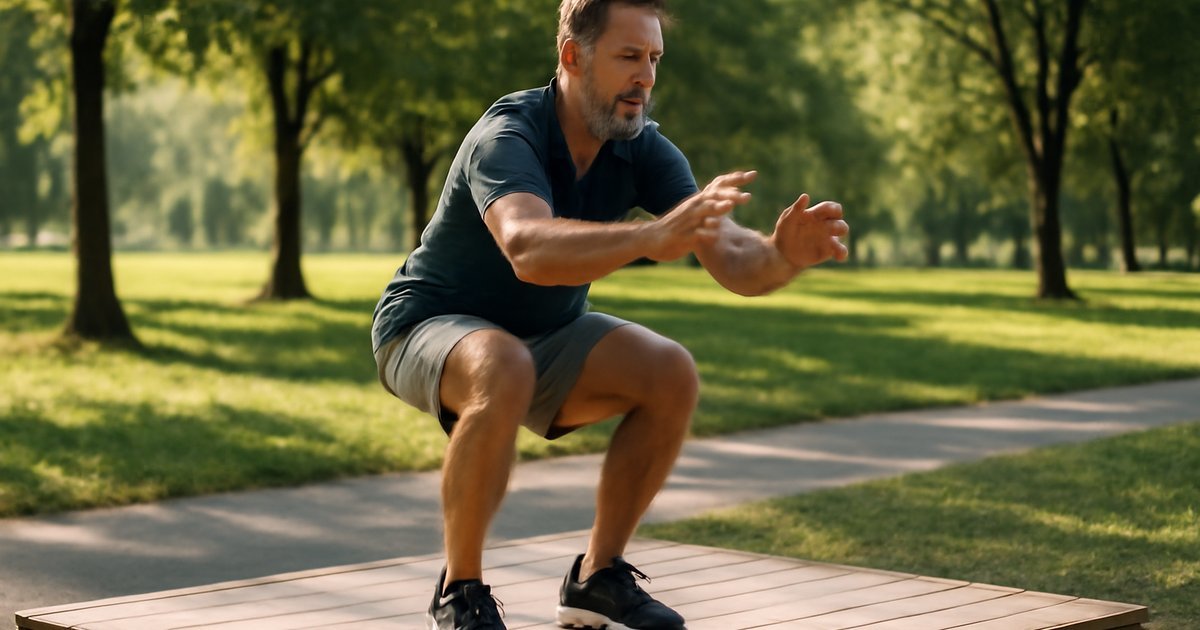
Building explosive power after 40 is not only possible — it may be one of the most protective things you can do for your long-term health and independence.
When Marcus, 47, told his doctor he wanted to try jump training, he expected pushback. Instead, his physician smiled and said, "Done correctly, that is exactly what your body needs." Marcus had been walking and lifting moderately for years, but he felt slow, stiff, and cautious on his feet. Six months after adding plyometric exercises to his routine, he was moving with a confidence he had not felt since his 30s.
According to the National Institutes of Health, adults begin losing fast-twitch muscle fibers — the fibers responsible for explosive movement, balance recovery, and fall prevention — as early as age 35. By 60, the decline can be significant enough to affect everyday safety. Plyometric training, which involves rapid, powerful movements designed to train those very fibers, offers a targeted solution that conventional steady-state cardio simply cannot replicate.
In this guide, you will learn what plyometric training is, why it matters uniquely for adults over 40, how to start safely, which exercises are most effective, and when to check with your doctor before beginning.
What Is Plyometric Training?
Plyometric training — sometimes called "plyos" or jump training — is a form of exercise that uses rapid stretching and contracting of muscles to develop explosive power. The term comes from the Greek word pleythyein, meaning "to increase." In clinical terms, plyometrics exploit the stretch-shortening cycle (SSC): a muscle first lengthens under load (eccentric phase), then rapidly shortens (concentric phase) to generate force.
Think of it like a compressed spring. The faster and more efficiently your muscles can cycle through that stretch-and-release, the more power, speed, and coordination you develop. Classic examples include jump squats, box jumps, lateral bounds, and clap push-ups — but low-impact variations exist for every fitness level and joint concern.
In the United States, plyometric training has long been associated with young athletes. That framing, however, is outdated. A 2022 meta-analysis published through the National Library of Medicine found that plyometric training significantly improved lower-body power, balance, and functional mobility in adults aged 50 to 70, with a favorable safety profile when properly progressed.
For adults over 40, the goal is not to train like a college sprinter. It is to preserve the neuromuscular capacity that keeps you upright, quick to react, and physically capable well into your 60s and 70s.
Why Plyometric Training Matters After 40
Here is a fact that rarely makes its way into mainstream fitness conversations: the CDC reports that falls are the leading cause of injury-related death among Americans 65 and older — and that fall risk begins accumulating silently well before that age.
The underlying mechanism is largely neuromuscular. As you age, your body loses fast-twitch muscle fibers and the neural pathways that activate them rapidly. This means that when you trip or slip, your body is slower to respond — making a stumble more likely to become a fall, and a fall more likely to become a fracture.
Plyometric training directly targets this vulnerability. Unlike slow, controlled strength training alone, plyos demand that your nervous system fire quickly, recruit large muscle groups simultaneously, and absorb force efficiently. Research from the American College of Sports Medicine indicates that combining strength training with plyometric exercises produces greater improvements in reactive balance and power output than strength training alone in older adults.
Beyond fall prevention, plyometric training has been associated with improved bone density, enhanced cardiovascular efficiency, increased caloric burn, and better athletic performance in recreational activities like tennis, golf, skiing, and cycling. It also stimulates the production of human growth hormone and supports lean muscle mass retention — both of which decline with age.
Signs You Are Ready — and When to Pause
Not every adult over 40 should start plyometric training on the same day or at the same intensity. Before you begin, it helps to honestly assess where you are physically — and to have a conversation with your healthcare provider if you have any existing conditions.
You are likely a good candidate if you can:
- Walk briskly for 30 minutes without significant discomfort
- Perform a bodyweight squat with controlled form through full range of motion
- Balance on one leg for at least 10 seconds
- Perform 10 controlled bodyweight lunges on each side
- Climb stairs without knee or hip pain
Red flags that warrant a physician conversation first:
- Unmanaged osteoporosis or history of stress fractures
- Knee or hip replacement within the past 12 months
- Uncontrolled hypertension or recent cardiac event
- Active joint inflammation, such as a flare of rheumatoid arthritis
- Severe balance impairment or recent falls
- Unexplained joint pain during low-impact activity
This varies from person to person. Some adults over 40 with mild osteoarthritis can safely engage in modified plyometrics under proper guidance; others may need to spend several months building a strength foundation first. Your doctor or a physical therapist can help you determine your individual readiness.
Getting Started: The Foundation Phase
One of the most common mistakes adults make when starting plyometric training is progressing too fast. Clinical evidence consistently indicates that a gradual, structured approach dramatically reduces injury risk and produces better long-term results.
The American College of Sports Medicine recommends that adults new to plyometrics begin with low-intensity, low-impact movements before introducing any airborne or high-force exercises. Think of this as building the runway before the plane takes off.
Phase 1 — Low-Impact Plyometrics (Weeks 1–4):
These movements train the stretch-shortening cycle without requiring you to leave the ground. They are ideal starting points for all fitness levels.
- Step Taps: Stand in front of a low step and rapidly tap your foot on and off the surface, alternating legs. Focus on quick, light contact.
- Mini Squat Pulses: In a partial squat position, perform rapid up-and-down pulses, keeping feet on the ground. This trains muscular reactivity at the knee and hip.
- Standing Long Reach with Fast Return: Step forward into a lunge, then drive back to standing quickly, emphasizing speed on the return phase.
- Lateral Quick Steps: Step side to side rapidly over a line on the floor, focusing on light, quick foot strikes.
Aim for 2 sessions per week in this phase, keeping total plyometric volume to 10–15 minutes per session. Allow 48 hours of recovery between sessions.
Intermediate Plyometric Exercises for Adults Over 40
Once you have completed four weeks of low-impact plyometrics and feel strong and stable in those movements, you can progress to moderate-impact exercises. A 2021 study in the Journal of Aging and Physical Activity found that adults aged 40 to 65 who followed a progressive plyometric program over 8 weeks demonstrated significant improvements in jump height, single-leg balance, and stair-climbing speed compared to a control group.
Phase 2 — Moderate-Impact Plyometrics (Weeks 5–10):
- Jump Squat (Controlled Landing): From a squat position, push through your heels to jump, then land softly with knees slightly bent. Prioritize a quiet, controlled landing over maximum height.
- Box Step-Up to Hop: Step up onto a low platform, then perform a small hop off the top, landing with both feet together. Step back down and repeat.
- Lateral Bound: Push off one foot to travel laterally, landing softly on the opposite foot, pausing to stabilize before repeating. This mimics real-life balance recovery.
- Broad Jump: Jump forward from a two-foot stance, landing softly with knees absorbing the impact. Focus on distance and landing mechanics rather than power.
- Explosive Push-Up: From a standard push-up position, push up forcefully so your hands briefly leave the ground. Regress to an elevated surface (countertop or bench) to reduce wrist and shoulder load.
Increase sessions to 3 per week if your recovery allows, keeping total plyometric volume at 15–20 minutes. Always warm up with 5–10 minutes of dynamic movement before beginning.
Landing Mechanics: The Safety Detail That Changes Everything
If there is one technical skill that separates safe, effective plyometric training from injury-prone plyometric training, it is landing mechanics. Research from the NIH’s National Institute of Arthritis and Musculoskeletal and Skin Diseases identifies poor landing biomechanics as a primary contributor to knee and ankle injuries in training adults.
Follow these principles on every landing:
- Land toe-to-heel: Your forefoot should contact the ground first, followed by the heel, distributing force across the full foot.
- Soft knees: Never lock your knees on landing. A slight bend absorbs impact and protects the joint.
- Hips back: Push your hips slightly back and down as you land, engaging your glutes and hamstrings to distribute load away from the knee.
- Quiet is good: A loud thud on landing means excessive impact force. Aim for quiet, controlled landings every time.
- Stable base: Your feet should land approximately hip-width apart for double-leg landings, and you should be able to hold the landing position for 2 seconds without wobbling.
If your landing mechanics feel unstable, step back to Phase 1 movements and spend additional time on single-leg balance and controlled squat work before re-introducing jumping.
Sample Weekly Plyometric Training Plan for Adults Over 40
This schedule assumes you have completed the foundation phase and are ready for moderate-intensity training. Adjust based on your individual recovery, energy levels, and any feedback from your body or healthcare provider.
Monday — Plyometric + Strength:
- Dynamic warm-up: 8 minutes (leg swings, hip circles, light marching)
- Jump squats: 3 sets × 8 reps
- Lateral bounds: 3 sets × 6 reps per side
- Bodyweight squats: 3 sets × 12 reps
- Romanian deadlift: 3 sets × 10 reps
- Cool-down stretch: 5–7 minutes
Wednesday — Recovery or Low-Impact Movement:
- 30-minute brisk walk or gentle cycling
- Foam rolling and mobility work
Friday — Plyometric + Upper Body:
- Dynamic warm-up: 8 minutes
- Broad jumps: 3 sets × 6 reps
- Explosive push-ups (elevated): 3 sets × 6 reps
- Step-up to hop: 3 sets × 8 reps per leg
- Dumbbell rows: 3 sets × 10 reps
- Cool-down stretch: 5–7 minutes
For related foundational training content, see our guides on Strength Training After 50: Build Muscle Safely and Bodyweight Squat Progressions for Adults Over 40 to build the base your plyometric work will depend on.
Living With Plyometric Training: Recovery and Long-Term Habits
Recovery is not optional — it is where adaptation happens. After a plyometric session, your muscles, tendons, and nervous system need time to rebuild stronger than before. Clinical evidence from the Cleveland Clinic indicates that adults over 40 generally require 48 to 72 hours of recovery between high-intensity training sessions involving the same muscle groups.
Practical recovery strategies:
- Prioritize sleep: Deep sleep is when your body releases growth hormone and repairs muscle tissue. Aim for 7–9 hours per night.
- Protein intake: Research suggests adults over 40 benefit from consuming 1.2 to 1.6 grams of protein per kilogram of body weight daily to support muscle repair. Consult your physician or a registered dietitian for personalized guidance.
- Stay hydrated: Even mild dehydration impairs muscle function and increases injury risk. Drink water consistently throughout the day.
- Active recovery: Light walking, swimming, or gentle yoga on non-plyometric days supports circulation and reduces stiffness without delaying recovery.
- Listen to joint feedback: Mild muscle soreness is normal. Sharp joint pain, swelling, or pain that worsens after 24 hours is not. Treat these as signals to rest and consult a provider.
You may also find our guide on Resistance Band Workouts for Adults Over 50 useful for lighter training days that keep your muscles active without high-impact demand.
When to Call Your Doctor or Seek Immediate Care
Most adults who approach plyometric training progressively and sensibly do so without incident. However, there are circumstances where you should pause training and contact your healthcare provider — and others that require immediate medical attention.
Contact your doctor if you experience:
- New or worsening joint pain that persists more than 72 hours after training
- Noticeable swelling in a knee, ankle, or hip
- Numbness, tingling, or weakness in a limb during or after exercise
- Unexpected shortness of breath or heart palpitations during moderate exertion
- A significant decrease in balance or coordination that was not previously present
Seek emergency care immediately if you experience:
- Chest pain, tightness, or pressure during exercise
- Sudden severe joint pain with an audible pop (may indicate ligament or tendon rupture)
- Dizziness, fainting, or loss of consciousness
- Sudden severe shortness of breath not explained by exertion
When you see your doctor for a routine visit, it is worth mentioning that you have added plyometric training to your routine. Share what exercises you are doing, your frequency, and any symptoms you have noticed. Most physicians will appreciate the information and can help you optimize your approach based on your full health picture.
Frequently Asked Questions
Is plyometric training safe for adults with osteoarthritis?
It depends on the severity and location of the arthritis, as well as your current functional level. Some adults with mild-to-moderate osteoarthritis can safely perform low-impact plyometric variations. Others may need to focus on strength training first and introduce plyometrics only under the guidance of a physical therapist. Always consult your physician before starting.
How long before I notice results from plyometric training?
Most adults begin noticing improvements in balance, leg power, and movement confidence within 6 to 8 weeks of consistent training. Research suggests that neuromuscular adaptations — the nervous system becoming more efficient at recruiting muscle fibers quickly — begin earlier, often within 3 to 4 weeks.
Can I do plyometrics if I have had a knee replacement?
This is a highly individual question that must be answered by your orthopedic surgeon. In general, high-impact jumping is not recommended after knee replacement. However, some low-impact plyometric movements may be appropriate with proper clearance and guidance from a physical therapist experienced in post-surgical rehabilitation.
Do I need special equipment to do plyometric training at home?
No. Many effective plyometric exercises require only your bodyweight and a safe, clear floor space. A low step or sturdy platform can expand your options, and supportive athletic shoes with good shock absorption are strongly recommended. Avoid plyometrics on slippery or uneven surfaces.
Should I do plyometrics before or after strength training?
Most sports scientists and certified trainers recommend performing plyometric exercises at the beginning of your session — after a thorough warm-up — when your neuromuscular system is freshest. Fatigued muscles are less able to generate power and are more prone to improper landing mechanics, which increases injury risk.
Conclusion
Plyometric training after 40 is not about recapturing youth or competing with 25-year-olds. It is about preserving the neuromuscular speed, reactive balance, and explosive capacity that your body needs to stay safe, capable, and active for decades to come.
Starting smart — with low-impact movements, solid landing mechanics, and adequate recovery — makes all the difference. The research is clear: adults who train their fast-twitch muscle fibers regularly are more resilient, more coordinated, and less likely to experience the falls and functional decline that too often define aging in America.
Talk with your doctor, build your foundation, and take it one progression at a time. Your future self will thank you for every careful, powerful rep.
This article is for informational and educational purposes only. It does not constitute medical advice, diagnosis, or treatment. Always consult your physician or a qualified healthcare provider before making changes to your health routine or treatment plan.
Medically reviewed by our editorial health team. Content follows evidence-based standards aligned with CDC and NIH guidelines.
Leave a Reply