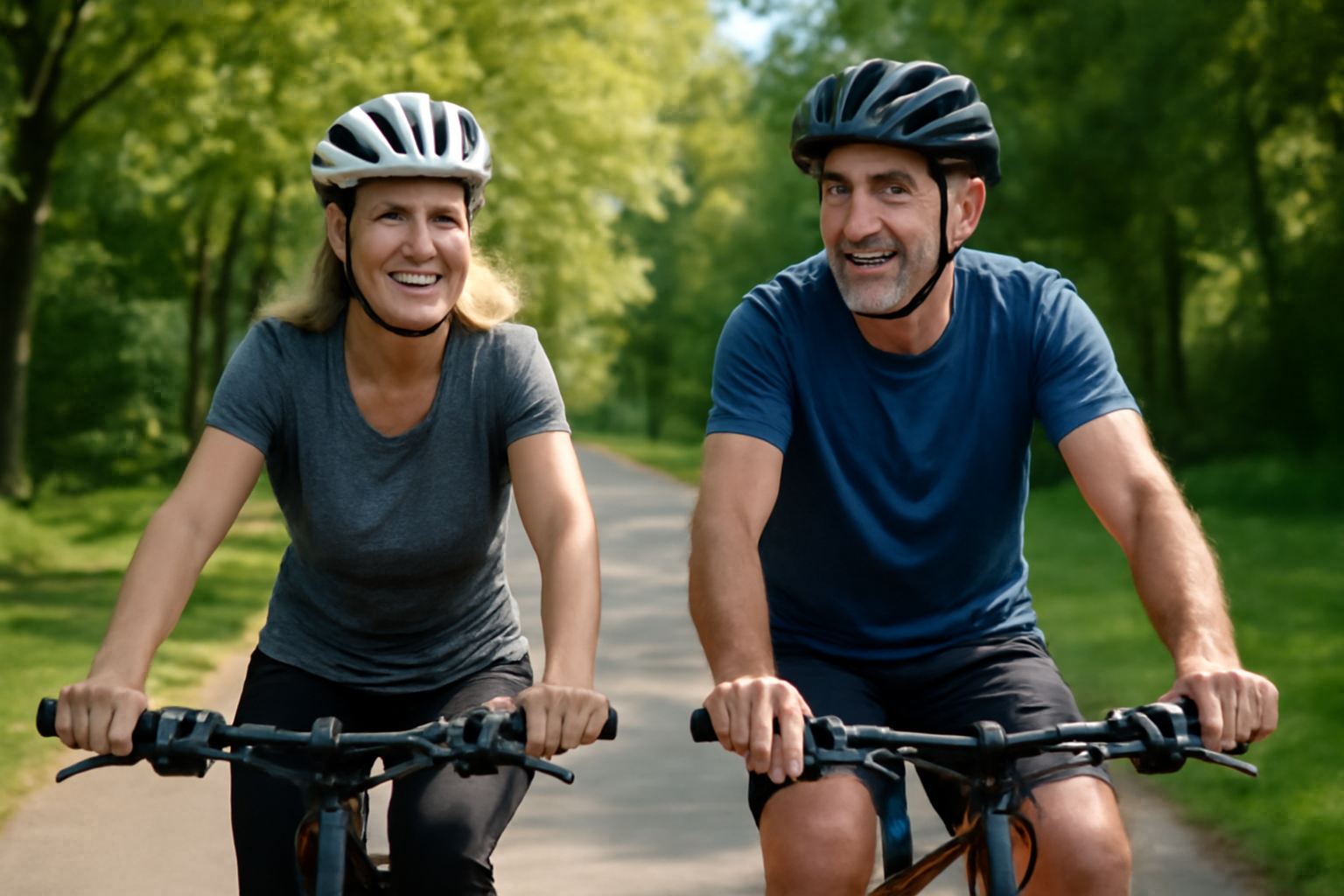
Cycling is one of the most joint-friendly, heart-strengthening, and mood-boosting exercises available to adults over 50 — and research confirms it can add quality years to your life.
Consider Tom, 63, who had spent most of his adult life behind a desk. After his doctor flagged borderline high blood pressure and rising cholesterol at his annual checkup, Tom decided to dust off the old bicycle in his garage. Six months later, his blood pressure had dropped into a healthy range, he had lost 14 pounds, and — perhaps most importantly — he was sleeping better and feeling sharper at work.
Tom’s story isn’t unusual. According to the CDC, fewer than 25% of American adults meet the recommended weekly guidelines for both aerobic and muscle-strengthening activity. For adults over 50, that gap grows even wider — and the consequences range from cardiovascular disease to cognitive decline.
Cycling offers a compelling solution. Whether you prefer a road bike, a stationary cycle, or an e-bike, this guide will walk you through the proven health benefits of cycling after 50, how to ride safely with aging joints and bones, and exactly how to build a sustainable routine — even if you haven’t been on a bike in decades.
What Makes Cycling Ideal for Adults Over 50?
Cycling is classified as a low-impact aerobic exercise, meaning it elevates your heart rate and burns calories without the repetitive pounding stress associated with running or jumping. For adults over 50 — many of whom deal with arthritis, knee discomfort, or reduced bone density — this distinction matters enormously.
Unlike walking, cycling also allows you to sustain a moderate-to-vigorous intensity for longer durations, which is where many of its cardiovascular and metabolic benefits accumulate. And because the saddle supports a significant portion of your body weight, your knees, hips, and ankles are spared the impact forces that often sideline older exercisers.
A landmark study published in the Journal of the American Geriatrics Society found that regular cyclists in their 50s and 60s showed biological aging markers — including cardiovascular efficiency and muscle mass preservation — comparable to people 20 to 30 years younger. That is not a minor finding.
Clinical evidence also indicates that cycling is accessible across a wide fitness spectrum. You can start at an easy, conversational pace and gradually increase intensity as your fitness improves. This scalability makes it one of the most beginner-friendly exercises for midlife and older adults.
Health Benefits of Cycling After 50: What the Research Shows
The benefits of regular cycling extend far beyond weight management. Here is what clinical research and major health institutions consistently identify:
Cardiovascular health: The American Heart Association recommends at least 150 minutes of moderate-intensity aerobic activity per week for heart health. Cycling fits squarely within that recommendation. Research published in the European Heart Journal found that adults who cycled regularly had a significantly lower risk of cardiovascular events compared to non-cyclists, even after adjusting for other lifestyle factors.
Blood pressure and cholesterol management: Regular moderate-intensity aerobic exercise — including cycling — is consistently associated with reductions in systolic blood pressure and improvements in HDL (“good”) cholesterol. The NIH notes that exercise-induced improvements in blood pressure can rival the effects of certain antihypertensive medications in mildly hypertensive adults, though this varies from person to person and should never be used to replace prescribed treatment without physician guidance.
Weight and metabolic health: A 30-minute moderate cycling session can burn between 200 and 300 calories depending on your body weight and effort level. Over time, this caloric expenditure supports healthy weight maintenance — a critical factor for reducing the risk of type 2 diabetes, joint strain, and metabolic syndrome.
Muscle strength and joint health: Cycling engages the quadriceps, hamstrings, glutes, and calves in a controlled, low-impact motion. For adults with knee osteoarthritis — a condition affecting more than 32 million Americans according to the CDC — cycling is frequently recommended by orthopedic specialists as a safe way to strengthen the muscles surrounding the knee without aggravating joint surfaces.
Cognitive function and mental health: Research suggests that regular aerobic exercise increases blood flow to the brain and supports the production of brain-derived neurotrophic factor (BDNF), a protein linked to memory, learning, and mood regulation. A 2023 meta-analysis published in Neuroscience & Biobehavioral Reviews found that aerobic exercise — including cycling — was associated with meaningful reductions in symptoms of depression and anxiety in adults over 50.
Balance and fall prevention: While cycling itself doesn’t train static balance the same way yoga or tai chi does, it does strengthen the lower body and improve proprioception (your body’s sense of position in space), both of which contribute to fall resistance. If fall prevention is a specific concern, consider pairing cycling with dedicated balance training after 50.
Getting Started Safely: What You Need to Know First
Before you clip in or push off, a few safety and preparation steps will help protect your health and make your experience more enjoyable from day one.
See your doctor first. If you have been sedentary for more than six months, have a known cardiovascular condition, manage diabetes, or have orthopedic concerns, schedule a checkup before starting any new exercise program. Your physician can help identify any contraindications and may suggest a cardiac stress test or musculoskeletal evaluation.
Choose the right bike for your body:
- Road bikes — best for distance and speed, but the forward-lean position can stress the lower back and wrists
- Hybrid bikes — a versatile middle ground with a more upright posture; ideal for most beginners over 50
- Recumbent bikes — seated in a reclined chair-like position; excellent for people with lower back pain or balance concerns
- Stationary bikes — indoor cycling with zero traffic risk; a great starting point for deconditioned adults
- E-bikes — electric-assist bikes allow you to cover more distance with less exertion; research suggests e-bike riders still achieve meaningful aerobic benefit and are significantly more likely to ride consistently
Get a proper bike fit. An improperly fitted bike is one of the most common causes of cycling-related pain and injury. Most local bike shops offer fitting services. Key adjustments include seat height (your knee should have a slight bend at the bottom of the pedal stroke), handlebar height (upright enough to avoid neck strain), and reach (you should not feel cramped or overstretched).
Wear a helmet — every single ride. The CDC reports that head injuries account for the majority of cycling fatalities in the US. A properly fitted helmet reduces the risk of serious head injury by up to 85%, according to the Insurance Institute for Highway Safety.
Other essential gear:
- Padded cycling shorts to reduce saddle discomfort
- Bright or reflective clothing for visibility
- Lights (front and rear) for low-light conditions
- A water bottle or hydration pack — dehydration risk increases with age
- Sunscreen — UV exposure during outdoor rides is cumulative and significant
How to Build a Cycling Routine After 50: A Week-by-Week Plan
The most common mistake new cyclists make is doing too much too soon. Research on exercise adherence consistently shows that gradual progression reduces injury risk and dramatically improves long-term consistency.
Most physicians and exercise physiologists recommend using the Rate of Perceived Exertion (RPE) scale rather than obsessing over speed or mileage when starting out. On a scale of 1 to 10, aim for a 5-6 (moderate effort — you can speak in short sentences but not hold a full conversation).
Weeks 1–2: Foundation
- 3 rides per week, 15–20 minutes each
- Flat terrain or stationary bike at low resistance
- RPE: 4–5 (light to moderate effort)
- Focus on form, breathing, and getting comfortable in the saddle
Weeks 3–4: Building Endurance
- 3–4 rides per week, 20–30 minutes each
- Introduce gentle rolling terrain if outdoors
- RPE: 5–6 (moderate effort)
- Add a 5-minute warm-up and cool-down at low intensity
Weeks 5–8: Progressive Aerobic Base
- 4 rides per week, 30–45 minutes each
- One longer ride per week (45–60 minutes at easy pace)
- RPE: 5–7; one ride per week at 7 (vigorous effort)
- Begin incorporating light hills or increased resistance
Month 3 and Beyond: Maintenance and Variety
- Aim for 150–300 minutes of moderate cycling per week (consistent with AHA guidelines)
- Mix intensity levels: two moderate rides, one easy recovery ride, one slightly harder effort
- Consider joining a local cycling club for social motivation and route variety
Complement your cycling with core training after 40 to strengthen the stabilizing muscles that support your spine and pelvis during rides. And on recovery days, incorporating low-impact cross-training exercises like swimming or walking can maintain your aerobic base without fatiguing the same muscle groups.
Common Cycling Injuries After 50 — And How to Prevent Them
Most cycling-related discomfort is preventable with proper setup, technique, and progression. Here are the most frequent issues and evidence-based prevention strategies:
Knee pain: Often caused by a saddle that is too low (forces the knee into excessive flexion) or too high (causes overextension). Raise or lower the seat in small increments and consult a bike fitter. Strengthening the quadriceps and glutes also reduces knee loading during the pedal stroke.
Lower back pain: Typically results from excessive forward lean, tight hamstrings, or weak core muscles. Raising the handlebars, reducing ride duration initially, and adding targeted core exercises can resolve most cases.
Saddle soreness: Almost universal among new cyclists. Padded shorts, a properly contoured saddle, and chamois cream reduce friction. Most saddle discomfort resolves within the first 2–3 weeks as tissues adapt.
Hand and wrist numbness: Caused by excessive weight on the handlebars or gripping too tightly. Padded gloves, ergonomic grips, and adjusting handlebar height typically resolve this issue.
Overuse injuries: Tendons and connective tissue take longer to adapt than cardiovascular fitness in adults over 50. Avoid increasing weekly mileage by more than 10% per week — a widely cited guideline in sports medicine.
When to See Your Doctor: Red Flags While Cycling
Most exercise-related sensations are normal — mild muscle fatigue, slightly elevated heart rate, temporary breathlessness. But certain symptoms require immediate attention and should never be dismissed as “just exercise.”
Stop riding and call 911 immediately if you experience:
- Chest pain, pressure, or tightness during or after a ride
- Pain radiating to the jaw, left arm, or upper back
- Sudden severe shortness of breath disproportionate to your effort level
- Heart palpitations that feel irregular, rapid, or accompanied by dizziness
- Fainting or near-fainting (syncope)
- Sudden, severe joint pain with swelling — this may indicate an acute injury
Schedule a doctor’s appointment if you notice:
- Persistent knee, hip, or lower back pain lasting more than a week despite rest
- Numbness or tingling in the hands or feet that does not resolve post-ride
- Unusual fatigue that worsens over multiple weeks of training
- Any new or unexplained symptom that concerns you
Always tell your doctor you have started a cycling routine. This context helps them interpret any new symptoms accurately and can guide adjustments to medications (some blood pressure medications, for example, can affect heart rate response during exercise).
Frequently Asked Questions About Cycling After 50
Is cycling safe if I have knee arthritis?
For most people with knee osteoarthritis, cycling is not only safe but actively recommended by rheumatologists and orthopedic specialists. The low-impact, circular pedaling motion lubricates the joint and strengthens surrounding muscles without the compressive forces of running or stair-climbing. This varies from person to person, so consult your physician before starting — especially if arthritis is moderate to severe.
How many days per week should I cycle to see results?
Research suggests that 3–4 days per week of moderate cycling is sufficient to produce meaningful cardiovascular, metabolic, and mental health improvements. Consistency over months matters more than any single week of high volume.
Can cycling help with weight loss after 50?
Clinical evidence indicates that cycling contributes to a caloric deficit necessary for weight loss, especially when combined with a nutritious diet. However, weight loss after 50 typically progresses more slowly due to hormonal and metabolic changes. Most experts recommend focusing on fitness improvements — energy, strength, cardiovascular markers — rather than scale weight alone.
Is an e-bike a “real” workout?
Yes. A 2019 study published in Transportation Research Interdisciplinary Perspectives found that e-bike riders achieved heart rates in the moderate-intensity zone during typical commutes and recreational rides. E-bikes also dramatically increase the likelihood that older or deconditioned adults will ride consistently — which is ultimately the most important variable for health outcomes.
What if I haven’t ridden a bike in 20 years?
Motor memory for cycling is remarkably durable — the saying “it’s like riding a bike” is backed by neuroscience. Starting on a stationary bike eliminates balance and traffic concerns entirely while you rebuild confidence and fitness. Most people transition to outdoor cycling within a few weeks of indoor training.
Conclusion: Your Wheels, Your Health
Cycling after 50 is not about racing or recapturing your youth. It is about giving your heart, joints, muscles, and mind a sustainable, evidence-backed tool for feeling better — today and for the decades ahead.
The research is clear: regular cycling reduces cardiovascular risk, supports healthy weight, protects joint function, and improves mood and cognitive function. And unlike many fitness activities, it adapts to where you are right now — whether that means a 15-minute stationary bike session or a 45-minute trail ride on a Sunday morning.
Start where you are, progress gradually, and make sure your doctor is part of the conversation. The best workout is always the one you can do consistently — and for millions of Americans over 50, cycling is exactly that.
This article is for informational and educational purposes only. It does not constitute medical advice, diagnosis, or treatment. Always consult your physician or a qualified healthcare provider before making changes to your health routine or treatment plan.
Medically reviewed by our editorial health team. Content follows evidence-based standards aligned with CDC and NIH guidelines.
Leave a Reply